
Homeowner Tips & Guides
South Florida's hurricane season exposes homes to lightning surges, flooding, and grid instability. These 5 electrical upgrades - installed by a licensed Miami electrician - protect your home, appliances, and family all season long.
The five most effective electrical upgrades to storm-proof a South Florida home are: installing whole-home surge protection, upgrading to GFCI and AFCI outlets, replacing an aging panel, adding a transfer switch for a backup generator, and sealing and weatherproofing all exterior electrical components. Each upgrade directly reduces the risk of fire, electrocution, and costly post-storm damage for homeowners in the Miami metropolitan area.
South Florida's hurricane season runs June through November, delivering voltage spikes, flooding, and sustained power outages that standard residential wiring simply wasn't designed to handle. A licensed Miami electrician can complete most of these upgrades in a single visit - and many qualify as same day repair jobs when you call early.
Miami-Dade and Broward counties face a combination of electrical threats that most of the country never experiences: direct lightning strikes, saltwater humidity that accelerates corrosion, storm surge that saturates walls, and grid instability that produces brown-outs and spikes in rapid succession. Older homes - particularly those built before the 1990 National Electrical Code revisions - are especially vulnerable. A single lightning strike within a quarter mile of your home can send a surge of 6,000 volts or more through unprotected circuits, destroying appliances and starting hidden fires inside walls.
The good news: every upgrade below can be scheduled with a qualified electrical handyman Miami residents trust, and each one carries a measurable return in safety and insurance savings.
A point-of-use surge protector on your TV costs about $30. A whole-home surge protector installed at the main panel costs $250–$600 installed and shields every circuit simultaneously. The device clamps excess voltage - typically anything above 330V - before it reaches your wiring, outlets, or connected appliances.
During a single hurricane season, a Miami home can experience dozens of measurable voltage events. Each one degrades unprotected electronics incrementally, even if no single spike causes visible damage. A whole-home device rated at 40,000 amps or higher (look for UL 1449 4th Edition listing) provides the baseline protection every South Florida home needs before storm season opens.
Who installs it: A licensed Miami electrician - this is a panel-level job, not a DIY project. Installation typically takes 1–2 hours and qualifies for same day repair scheduling at most electrical service companies.
Ground Fault Circuit Interrupter (GFCI) outlets shut off power within 1/25th of a second when they detect a ground fault - the condition that causes electrocution. Arc Fault Circuit Interrupter (AFCI) breakers detect dangerous arcing that standard breakers miss, which is the leading cause of home electrical fires.
Florida's 2023 building code update requires GFCI protection in all bathrooms, kitchens, garages, outdoors, and near any water source. AFCI protection is required in all sleeping areas and most living spaces in new construction and major renovations. If your home predates these requirements, it almost certainly has gaps.
Scheduling an electrical handyman Miami service to audit and replace all non-compliant outlets is one of the highest-value home electrical repair projects you can complete before storm season.
An undersized or outdated electrical panel is the single biggest electrical liability in older South Florida homes. Panels from brands like Federal Pacific Electric (Stab-Lok) and Zinsco - common in homes built between 1950 and 1990 - have documented failure rates and are rejected by many homeowners' insurance carriers in Miami-Dade County.
Signs your panel needs immediate professional evaluation:
A standard panel upgrade to 200 amps typically runs $1,800–$3,500 installed in the Miami area, depending on permit fees and the complexity of the existing wiring. This is not a handyman job - it requires a licensed electrician, a permit, and a county inspection. However, it is one of the most impactful electrical safety tips any South Florida homeowner can act on.
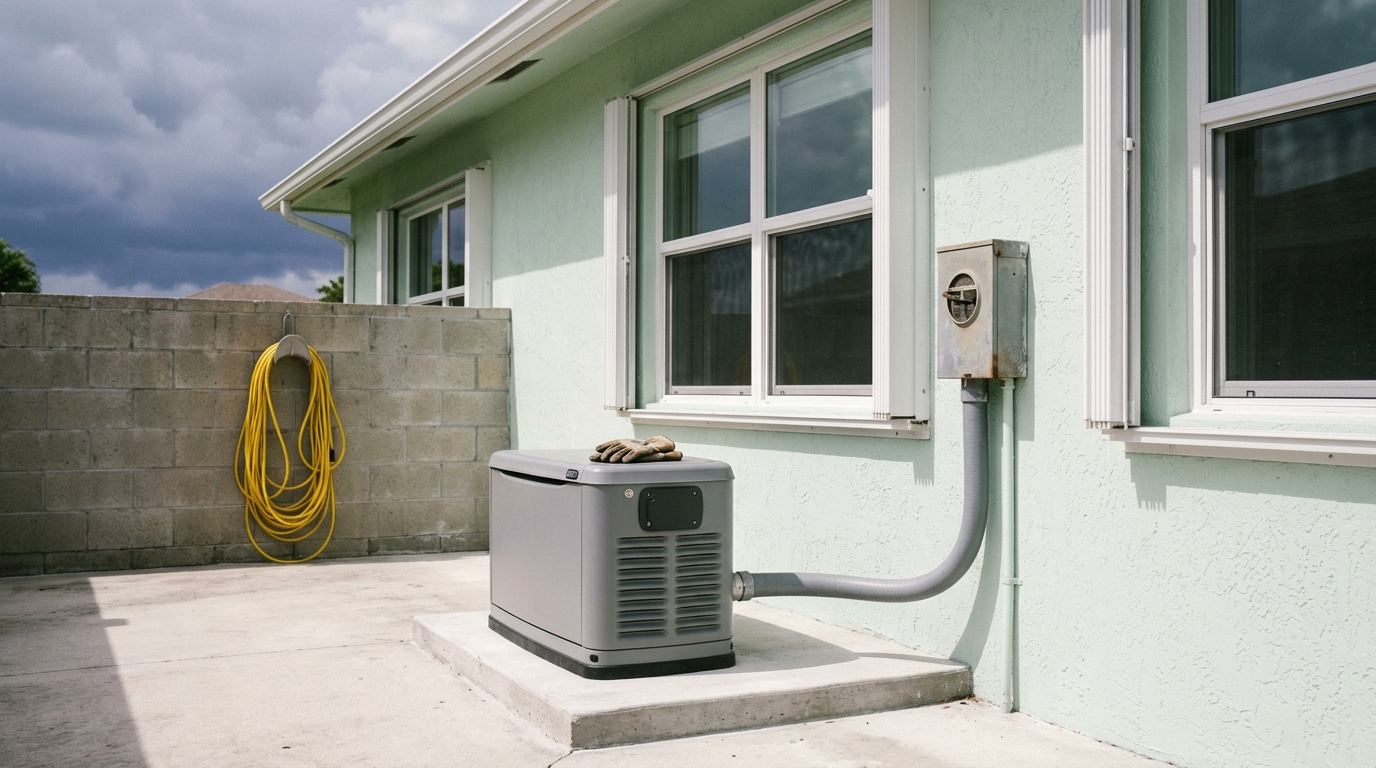
Running a portable generator without a transfer switch - by plugging it directly into a dryer outlet or using an extension cord - is called back-feeding, and it kills utility workers restoring power after storms. It also voids most homeowners' insurance policies and violates Florida statute.
A manual transfer switch costs $300–$600 installed and lets you safely connect a portable generator to selected circuits. An automatic transfer switch (ATS) costs $700–$1,500 installed and switches to generator power within seconds of detecting an outage - no manual action required.
With South Florida power outages averaging 3–5 days after a major storm event, a properly installed transfer switch combined with a generator rated at 7,500 watts or higher will keep your AC, refrigerator, and critical medical equipment running safely. A licensed Miami electrician handles the permit and wiring; installation is typically a same day job for most residential configurations.
Every outdoor outlet, junction box, fixture, and conduit entry point is a potential water intrusion site during a tropical storm. Standard in-use covers - the flip-lid style - provide only minimal protection during driven rain. Bubble covers (also called "in-use weatherproof covers") maintain a watertight seal even when a device is plugged in.
A complete exterior weatherproofing service from a qualified electrical handyman includes:
This service is well within the scope of a same day handyman visit and is one of the most affordable electrical safety upgrades on this list, typically running $150–$400 for a standard single-family home.
When in doubt, the safest and most cost-effective call is to a licensed Miami electrician who offers a One Year Warranty on parts and labor. Warranty-backed work protects your investment and gives you documented proof of compliance if your insurance carrier requests it.
Have a licensed Miami electrician inspect your panel before June 1. Key red flags include panels rated below 200 amps, Federal Pacific or Zinsco brand labels, tripping breakers, corrosion, or a burning smell. A professional inspection takes 30–60 minutes and costs $75–$150 - a fraction of the cost of storm-related electrical damage.
Whole-home surge protection is the single highest-impact upgrade for most Miami-area homes, because it protects every circuit simultaneously and addresses the most common storm-related electrical threat: voltage spikes from lightning and grid instability. It works in combination with, not instead of, GFCI/AFCI protection and panel upgrades.
No. Back-feeding a generator into your home without a properly installed transfer switch is illegal in Florida, creates a lethal hazard for utility crews, and voids most homeowners' insurance policies. A licensed electrician can install a manual transfer switch as a same day repair in most residential configurations.
Most residential electrical repairs - outlet replacement, GFCI upgrades, surge protector installation, and exterior weatherproofing - are completed within 1–4 hours when scheduled as a same day handyman appointment. Panel replacements and transfer switch installations requiring permits typically take 4–8 hours plus inspection scheduling.
Coverage varies by policy, but most standard HO-3 policies in Florida cover sudden electrical damage from a named storm event. However, damage caused by gradual corrosion, code violations, or outdated panels is frequently excluded. Completing the upgrades in this post - and keeping documentation from a licensed electrician - strengthens any future claim and may qualify you for a premium discount from your carrier.
Call us today or fill out the form and we'll call you back within 2 business hours. Plans start at $69.99/mo.
1-833-426-3942