After a Miami Hurricane: What to Do First and How to Get Your Home Repaired Fast
After a hurricane strikes Miami, the correct sequence is: document before you touch anything, shut off utilities if damage is visible, then call a licensed emergency handyman in Miami within 24 hours to prevent secondary damage. Acting out of order costs homeowners thousands in denied insurance claims and preventable mold growth.
This guide covers both sides of the storm: the preparation steps that reduce damage before a hurricane arrives and the repair steps that restore your home safely after one passes. Whether you own a single-family home in Kendall, manage an apartment complex in Brickell, or handle maintenance for a Coral Gables property, the same structured approach applies.
Before the Storm: Hurricane Prep Checklist for Miami Homes
Miami-Dade County sits in a hurricane-prone corridor where Category 1–5 storms have made landfall repeatedly since records began in the 1850s. Preparation is not a one-time event. It is a seasonal discipline that runs from June 1 through November 30 every year.
Work through this checklist at least 72 hours before a named storm threatens South Florida:
- Install or inspect storm shutters. Accordion shutters are the most practical option for Miami homeowners because they deploy in under five minutes and require no storage space. Panel shutters cost less upfront but need ground-level storage and two people to install. Impact-rated windows eliminate the deployment step entirely but carry a higher installation cost. All three options meet Miami-Dade's Product Approval requirements when properly permitted.
- Secure roof-to-wall connections. Homes built before 2002 often lack hurricane straps connecting the roof deck to exterior walls. A licensed handyman or contractor can retrofit metal clips and straps in an attic in a single day. This single upgrade reduces roof loss probability significantly in high-wind events.
- Clear and secure exterior items. Patio furniture, potted plants, grills, and decorative rock become projectiles above 74 mph. Move everything indoors or into a locked garage. Pool pumps and equipment should be covered but left running until the last safe moment to keep the water circulating.
- Test your generator and stock fuel. South Florida power outages after major storms routinely last 7–21 days. Portable generators need fresh fuel and a functioning transfer switch or outdoor-rated extension cords routed to critical appliances. Whole-home standby generators should be serviced annually before hurricane season begins.
- Photograph every room and every elevation of your home's exterior. Date-stamped photos stored in a cloud account serve as pre-storm documentation for insurance purposes. Do this even if you have done it before; repairs and renovations change your home's documented condition.
- Check your garage door bracing. Garage doors are the most common point of wind-pressure failure in residential structures. Horizontal bracing kits are available at local hardware stores and can be installed without specialized tools. If your door is older than 15 years, ask a handyman to inspect the door's wind-load rating against current Miami-Dade code.
- Locate and label your utility shutoffs. Know where the main water valve, electrical panel, and gas meter are located. Mark them clearly so any household member or emergency responder can act quickly.
Storm Shutter Installation: Choosing the Right System for Your Property
Storm shutter installation is one of the highest-return investments a Miami homeowner can make, both for storm protection and for home resale value. The right choice depends on window count, building type, and how frequently the property is occupied during hurricane season.
| Shutter Type |
Deployment Time |
Best For |
Key Trade-off |
| Accordion Shutters |
1–5 minutes per opening |
Primary residences, elderly occupants |
Higher upfront installation cost |
| Roll-Down Shutters |
Under 2 minutes (motorized) |
Large openings, rental properties |
Requires periodic motor servicing |
| Panel Shutters (aluminum or steel) |
30–90 minutes for a full house |
Budget-conscious owners with storage space |
Labor-intensive, needs two people |
| Fabric/Screen Shutters |
20–60 minutes per opening |
Properties with HOA aesthetic rules |
Lower wind-load rating than rigid options |
| Impact-Rated Windows |
No deployment required |
Long-term owners, new construction |
Highest upfront cost, requires permits |
All shutter systems installed in Miami-Dade County require a permit and must carry a Product Approval number issued by the Florida Building Commission. A handyman service can install pre-approved panel systems on existing anchors, but full accordion or roll-down installations require a licensed contractor to pull permits.
After the Storm: Assessing Damage Before You Touch Anything
The 30 minutes immediately after a storm passes are the most consequential for your insurance claim and your personal safety. Follow this sequence without shortcutting steps.
- Wait for the official all-clear. Hurricane eyes produce a temporary calm, but the storm's trailing eyewall arrives within 20–45 minutes with winds equal to or greater than the leading wall. Stay sheltered until your county emergency management app issues an all-clear notification.
- Do a visual inspection from inside first. Look for ceiling stains, wall cracks, window failures, or visible daylight through the roof. Note the location and size of every damaged area before opening exterior doors.
- Photograph and video everything. Walk every room with your phone before touching any debris. Film the exterior from all four sides. Capture street-level flooding marks, fallen trees, and any damage to fencing, air conditioning equipment, or electrical meters.
- Shut off electricity if you see water intrusion. Do not enter a flooded room without shutting the circuit breakers serving that area. A licensed Miami electrician should inspect any panel or wiring that contacted floodwater before power is restored to that zone.
- Shut off the main water valve if you suspect pipe damage. Broken supply lines can dump hundreds of gallons into wall cavities in hours, creating conditions for mold growth within 48–72 hours.
- File your insurance claim the same day. Most homeowner policies in Florida require prompt notice. Same-day filing establishes your timeline, which matters if your insurer later disputes whether damage occurred during this storm or a prior event.
Post-Hurricane Home Repair: Priority Order and Trade Contractor Sequencing
Repairs must happen in a specific sequence, or one trade's work will be damaged by the next. Handymen, electricians, plumbers, and roofers all need to work in the right order to avoid redoing completed work.
The correct repair sequence for post-hurricane home repair is:
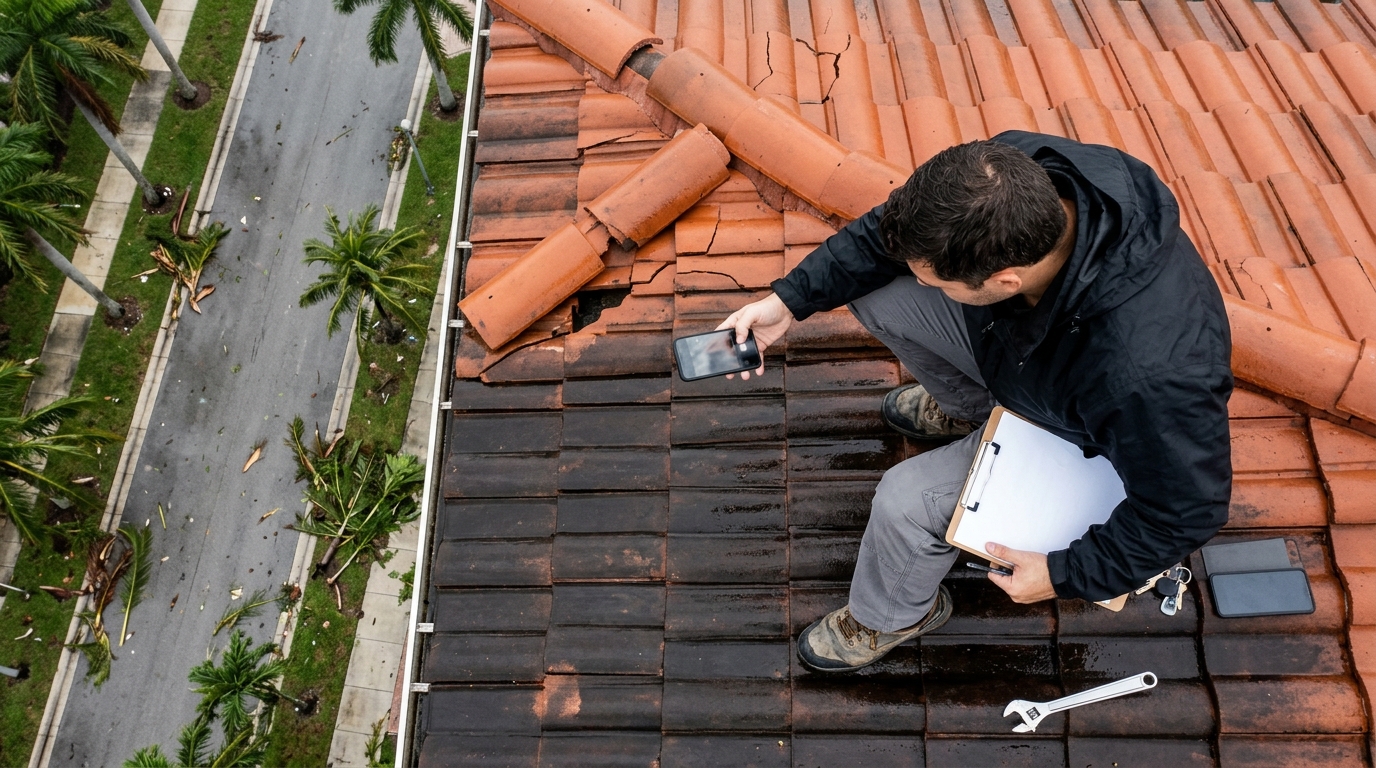
- Emergency tarping and board-up (within 24 hours). Any opening in the roof or walls must be temporarily sealed before rain re-enters. A same-day handyman service can tarp a roof opening, board a broken window, and secure a failed garage door in one visit. This step directly limits total loss and supports your insurance documentation.
- Water extraction and structural drying (within 48 hours). Industrial air movers and dehumidifiers need to run for a minimum of 3–5 days to dry framing and drywall. Mold colony formation begins in as few as 48 hours in Miami's heat and humidity.
- Electrical inspection and restoration. A licensed Miami electrician inspects the service entrance, panel, and any wiring in wet zones before power is restored. Florida requires an electrical inspection before the utility company reconnects service after a reported storm outage affecting the meter base.
- Structural repairs: roof, walls, windows. Permitted repairs to the building envelope follow water mitigation. This is where roofing contractors, window installers, and licensed general contractors complete the work that restores weather-tightness permanently.
- HVAC and air conditioning service. AC units that ran through a storm or sat idle for days need a post-storm inspection. Debris in condenser coils, refrigerant line damage from falling branches, and flooded air handler compartments are common post-storm failures. Restoring air conditioning quickly also controls indoor humidity and slows any mold progression.
- Interior finishes. Drywall, paint, flooring, and cabinetry are the final layer. Installing these before structural drying is complete traps moisture inside wall assemblies, which guarantees mold problems within weeks.
One Year Warranty and Why It Matters for Storm Repairs
Storm repairs completed without a written warranty leave homeowners exposed when latent damage appears weeks later. A reputable emergency handyman service in Miami provides a one year warranty on labor, which means if a repair fails within 12 months, the company returns and corrects the work at no additional charge. When you are comparing contractors after a storm, ask for the warranty in writing before signing any agreement. Verbal assurances do not hold up when a tarped roof leaks again in the next rain event.
Same day repair availability paired with a one year warranty is the minimum standard you should expect from any handyman or electrical service operating in Miami-Dade County after a storm event.
Post-Hurricane Home Repair FAQ
How soon should I call an emergency handyman in Miami after a hurricane?
Call within 24 hours of the storm passing. The first 24 hours determine whether water intrusion escalates into structural damage and mold. Emergency handyman services in Miami prioritize roof tarping, window boarding, and garage door securing as same day repairs precisely because delay multiplies total repair costs.
Does my homeowner's insurance cover emergency tarping and board-up?
Yes. Under most Florida homeowner policies, emergency protective measures like tarping and board-up are covered as part of the loss, provided you document the damage before work begins and retain all receipts. File your claim before authorizing any work, or at minimum photograph conditions before the handyman arrives.
Do I need a permit for storm shutter installation in Miami?
Yes. Miami-Dade County requires permits for all permanent storm shutter systems, including accordion and roll-down shutters. Panel shutters installed on pre-existing anchors may not require a new permit, but the anchors themselves must have been originally permitted. Impact window replacements always require a permit and a licensed contractor.
How long does post-hurricane structural drying take in Miami's climate?
Professional water mitigation companies target a minimum of 3–5 days of continuous drying with industrial equipment in Miami conditions. High ambient humidity, concrete block construction, and multi-layer flooring assemblies can extend the drying period to 7–10 days. Moisture readings must confirm that wall cavities have returned to below 16% moisture content before drywall installation begins.
Can a handyman handle electrical repairs after a storm, or do I need a licensed electrician?
Any repair involving your electrical panel, service entrance, or wiring that contacted floodwater requires a licensed electrician, not a general handyman. In Miami, the utility company requires an electrical inspection certificate before restoring service to a meter base that was damaged or reported as compromised. A qualified handyman service will coordinate with a licensed Miami electrician for these tasks rather than attempt them without the proper license.