
Homeowner Tips & Guides
A smart thermostat in Miami can hold indoor humidity near 45–55% and trim cooling energy use by 8–15%, but it cannot fix an oversized or failing AC. Here is how it works and what to check first.
Yes. A smart thermostat with humidity sensing and dehumidify-on-demand control can hold indoor relative humidity near the 45–55% target range in Miami homes, and it typically trims cooling energy use by 8–15% through scheduling and learning features. It cannot fix an oversized, leaking, or failing AC system, which is why installation and repair quality still decide the result.
Miami's outdoor dew points sit above 70°F for most of the year, so an air conditioner spends as much effort removing moisture as removing heat. A smart controller changes how the system runs, not what the system is physically capable of. This guide explains the mechanics, the trade-offs, and what to check before you buy a Nest, ecobee, or Honeywell unit.
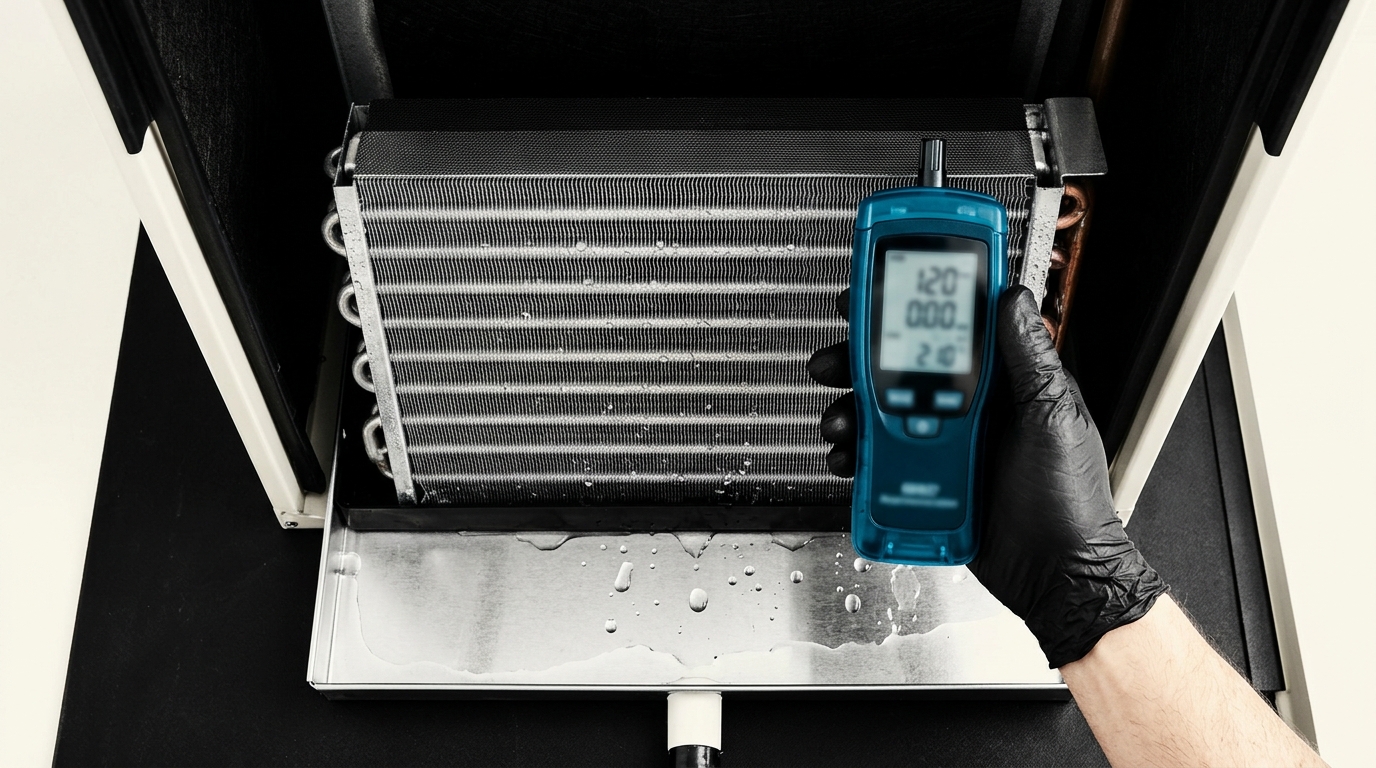
An air conditioner dehumidifies when warm, moist air crosses a cold evaporator coil (about 40–45°F surface temperature) and water condenses on it. Moisture removal only happens while the compressor runs. A system that satisfies the temperature setpoint quickly and shuts off, known as short cycling, leaves the home cool but clammy at 60–70% humidity.
This is the core problem in Miami. Oversized systems, mild rainy-day temperatures, and aggressive setpoints all produce short run times. A smart controller addresses it in three ways:
Dehumidify-on-demand depends on hardware. Variable-speed air handlers and two-stage compressors respond well. A basic single-stage system with a single-speed blower has limited ability to respond, and an aggressive dehumidify setting can overcool rooms.
| Feature | Standard Programmable | Smart Thermostat |
|---|---|---|
| Humidity reading | Rarely included | Built-in sensor on most models |
| Dehumidify control | None | Available on compatible equipment |
| Scheduling | Fixed 5-2 or 7-day | Learning or geofenced, adjusts to occupancy |
| Remote access | None | Phone app, alerts, voice control |
| Runtime reports | None | Monthly runtime and trend data |
| Fault alerts | None | Filter, temperature, and some equipment alerts |
Three product families dominate Florida installations, and they differ in humidity features:
Room sensors matter in multi-story and larger Miami homes, where upstairs bedrooms often run warmer and stickier than the hallway where the thermostat hangs.
Most failed smart thermostat installs trace back to wiring, not the device. Check these items before you buy:
A licensed technician confirms these items in about 30 minutes, and a proper install includes testing every stage, verifying the condensate drain is clear, and setting the fan and dehumidify options correctly.
Smart control saves energy only when settings fit the climate. Use these starting points:
A thermostat reports and directs. It does not repair. Persistent humidity above 60% despite proper settings usually points to a physical cause:
When a smart thermostat shows long runtimes with rising humidity, treat it as a diagnostic signal and schedule an inspection. Our AC repair near me service covers same day diagnosis of these faults, and repairs include a One Year Warranty.
If humidity stays above 55% in a correctly sized, well-sealed system, add a ducted whole-home dehumidifier. These units remove 70–120 pints per day, work independently of cooling demand, and connect to the thermostat through a dehumidifier terminal. This pairing lets you run a 78°F setpoint comfortably, which is the real energy saving in Florida.
Our electricians and HVAC technicians handle wiring checks, C-wire additions, thermostat setup, and same day repair when the system itself is the problem. Homeowners, apartment managers, and property teams can book same day handyman services for thermostat swaps across multiple units. Every installation and repair carries a One Year Warranty.
It lowers humidity when paired with compatible equipment and dehumidify settings. It measures humidity on most models and extends run times to remove moisture. It cannot compensate for oversized or faulty AC systems.
Most homes save 8–15% on cooling costs through better scheduling, geofencing, and cycle management. Savings are highest in homes with irregular occupancy and lowest in homes that already keep steady setpoints.
Most Nest models need continuous 24V power, either from a C-wire or the included Power Connector. A technician checks the air handler and adds a wire when a spare conductor exists.
Keep indoor relative humidity between 45% and 55%. Above 60%, mold and dust mite growth accelerates, and wood, drywall, and furnishings begin absorbing moisture.
No. Use the "Auto" fan setting in Miami. Continuous fan operation pushes moisture off the wet coil back into living spaces and raises indoor humidity.
Call us today or fill out the form and we'll call you back within 2 business hours. Plans start at $69.99/mo.
1-833-426-3942