
Homeowner Tips & Guides
Standard exterior paint is not a water barrier against hurricane-force rain. This guide covers the layered protection system Miami homeowners need, from elastomeric coatings to structural caulking.
Standard exterior paint does not waterproof a Miami home against hurricane-force rain. It provides a moisture-resistant film, not a water barrier. When sustained winds exceed 74 mph and rain drives horizontally at pressures that can exceed 150 pounds per square foot, ordinary latex or acrylic paint absorbs water, blisters, and begins to fail within hours. The real protection against hurricane rain intrusion comes from a layered system: elastomeric coatings, properly sealed penetrations, storm shutters, and sound structural caulking. Paint is the last line, not the first.
A Category 3 hurricane produces sustained winds of 111–129 mph. At those speeds, raindrops hit a wall surface with enough force to penetrate microscopic cracks invisible to the naked eye. The mechanism is called wind-driven rain infiltration. Water follows the path of least resistance: hairline cracks around window frames, expansion joints in stucco, gaps where utility conduit enters the wall, and nail holes from prior repairs.
Standard acrylic paint has an elongation rate of roughly 5–15%. That means the film can stretch that percentage before cracking under thermal movement or pressure. Miami's concrete block and stucco walls expand and contract with daily temperature swings between 65°F at night and 95°F in summer afternoons. Over one season, micro-cracks form. During a hurricane, those micro-cracks become water channels.
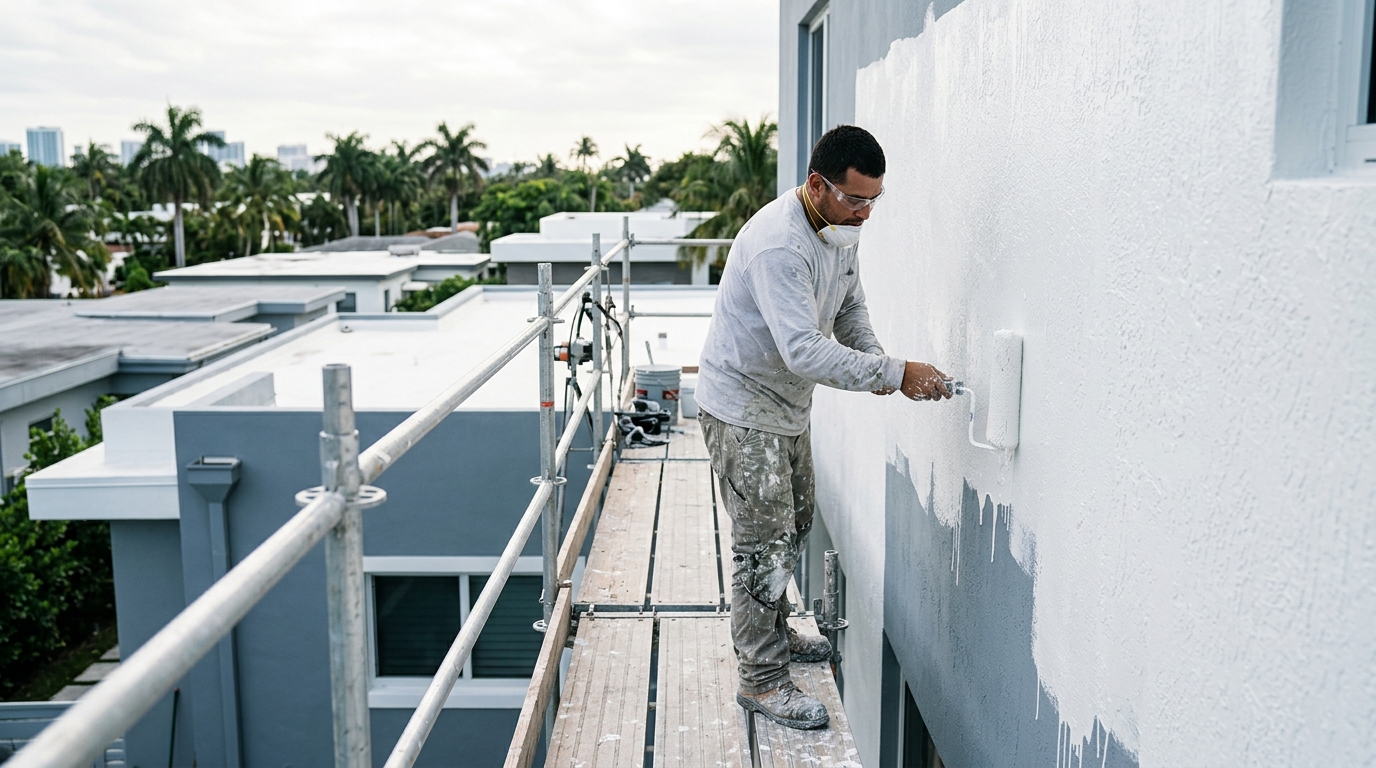
Elastomeric wall coatings are the upgrade that actually matters. These coatings achieve elongation rates of 200–400%, bridging cracks up to 1/16 inch. Applied at a wet film thickness of 10–20 mils compared to standard paint's 3–4 mils, a quality elastomeric product like Sherwin-Williams Loxon XP or BASF MasterProtect 300 creates a true waterproof membrane. The trade-off: elastomeric coatings trap moisture if the substrate is not fully dry at application, and they cost roughly 2–3 times more per square foot than standard exterior paint. For Miami homeowners in hurricane exposure zones, that cost differential is worth it.
A reliable hurricane prep checklist for Miami covers the 72 hours before landfall and the structural vulnerabilities that accumulate year-round. Work through these in order of impact:
Storm shutter installation is not a one-size-fits-all decision. Each product type carries different cost, deployment time, and protection level. The table below compares the four most common systems used on Miami residential properties:
| Shutter Type | Deployment Time | Protection Level | Best For |
|---|---|---|---|
| Accordion Shutters | Under 2 minutes per opening | Miami-Dade NOA rated, up to Cat 5 | Full-time residents, frequent storms |
| Roll-Down Shutters | Under 1 minute (motorized) | Miami-Dade NOA rated, up to Cat 5 | Larger openings, commercial or premium homes |
| Panel Shutters (aluminum or steel) | 30–60 minutes for full house | Miami-Dade NOA rated | Budget-conscious owners, seasonal residents |
| Fabric/Screen Shutters | 15–30 minutes | Wind-rated, limited impact protection | Low-impact zones, supplemental use |
Any shutter system used in Miami-Dade County must carry a Notice of Acceptance (NOA) from Miami-Dade Product Control. Purchasing shutters without checking the NOA number leaves you with a product that may fail the one inspection that matters. An emergency handyman in Miami can install panel shutter tracks and anchors, but motorized roll-down systems typically require a licensed specialty contractor and a permit.
After a storm passes and conditions are safe, post-hurricane home repair follows a specific priority sequence. Skipping steps creates compounding damage, particularly in Miami's humidity where mold establishes colonies within 24–48 hours of water intrusion.
Step 1: Life-safety inspection first. Before entering the structure, visually confirm there is no visible structural collapse, no downed power lines touching the building, and no smell of gas. If any of those conditions exist, contact Miami-Dade emergency services before entry.
Step 2: Identify and stop active water intrusion. Roof damage, blown-in windows, and wall breaches allow ongoing water entry. Use polyethylene sheeting and roofing tape as temporary fixes. A same day handyman can tarp a damaged roof section or board a broken window within hours of a storm, which directly limits total repair costs by preventing secondary water damage and mold.
Step 3: Remove standing water immediately. Wet-dry vacuums, submersible pumps, and professional water extraction equipment all work. The critical metric is getting surface water out within 24 hours. Concrete block absorbs moisture and holds it, so even after visible water is removed, wall cavities and flooring substructures need drying with commercial dehumidifiers operating continuously.
Step 4: Inspect electrical systems before restoring power. A Miami electrician should inspect any panel, outlet, or wiring that experienced water contact before power is reconnected. Flood-damaged wiring insulation breaks down and creates shock and fire hazards that are not visible without professional testing. This is not a step to defer.
Step 5: Document all damage before any cleanup or repair. Photograph every damaged surface, including ceilings, walls, floors, and exterior. Your insurance adjuster needs this documentation. Cleaning up before documentation can reduce or void a claim.
Step 6: Address air conditioning service as a priority. Miami's heat index routinely exceeds 100°F in summer months. Without functioning AC, interior temperatures and humidity accelerate mold growth. If the outdoor compressor unit sustained debris damage or flood exposure, have it inspected by a certified HVAC technician before running it. Running a flood-damaged compressor can destroy the motor within minutes.
When hiring any contractor or handyman for post-hurricane repair, verify that their work comes with a written one year warranty. This matters especially for stucco patching, caulking, and shutter track reinstallation, where failures often appear weeks after the repair when the next rain event hits. A one year warranty gives you documented recourse if the patch fails, the track corrodes, or the sealant separates before the next storm season arrives. Reputable handyman services in Miami back their work with this standard. If a contractor offers no warranty on post-storm repair work, treat that as a disqualifying condition.
Contact a same day handyman within 6–12 hours of storm passage once conditions are safe. Tarping, boarding, and sealing breaches in the first 24 hours directly limits secondary water damage and mold exposure. Miami's post-hurricane humidity means delays of 48 hours or more significantly increase total repair scope and cost.
Standard homeowner's insurance in Florida covers wind-driven rain damage when there is a structural breach, such as a failed window or blown-off shutter. Pure paint blistering or peeling without an associated structural breach is typically classified as maintenance failure and is excluded. Document everything before filing and consult your adjuster for policy-specific terms.
Panel shutter track anchoring and accordion shutter installation are tasks a qualified emergency handyman in Miami can complete with a permit for residential applications. Motorized roll-down systems require a licensed specialty contractor in most Miami-Dade jurisdictions. Verify permit requirements with Miami-Dade Building Department before scheduling any installation.
Elastomeric coatings with a minimum elongation rate of 200% and a wet film thickness of at least 10 mils provide the best protection against wind-driven rain infiltration. Sherwin-Williams Loxon XP, BASF MasterProtect 300, and Sto Lotusan are frequently specified on Miami residential projects. These are not standard paint products and require proper surface prep and a dry substrate for correct adhesion.
Search for handyman near me with verified Miami-Dade licensing, confirmed insurance, and a stated one year warranty on labor. Prioritize providers who confirm same day repair availability. After a major storm, demand surges and unlicensed contractors increase. Verify credentials through the Miami-Dade contractor lookup tool before signing any agreement, and get a written scope of work before work begins.
Call us today or fill out the form and we'll call you back within 2 business hours. Plans start at $69.99/mo.
1-833-426-3942