
Homeowner Tips & Guides
Emergency board-up and tarping seal broken windows, doors, and roof openings after a storm. Learn why most insurers expect it within 24–72 hours and how it starts Miami storm damage repair.
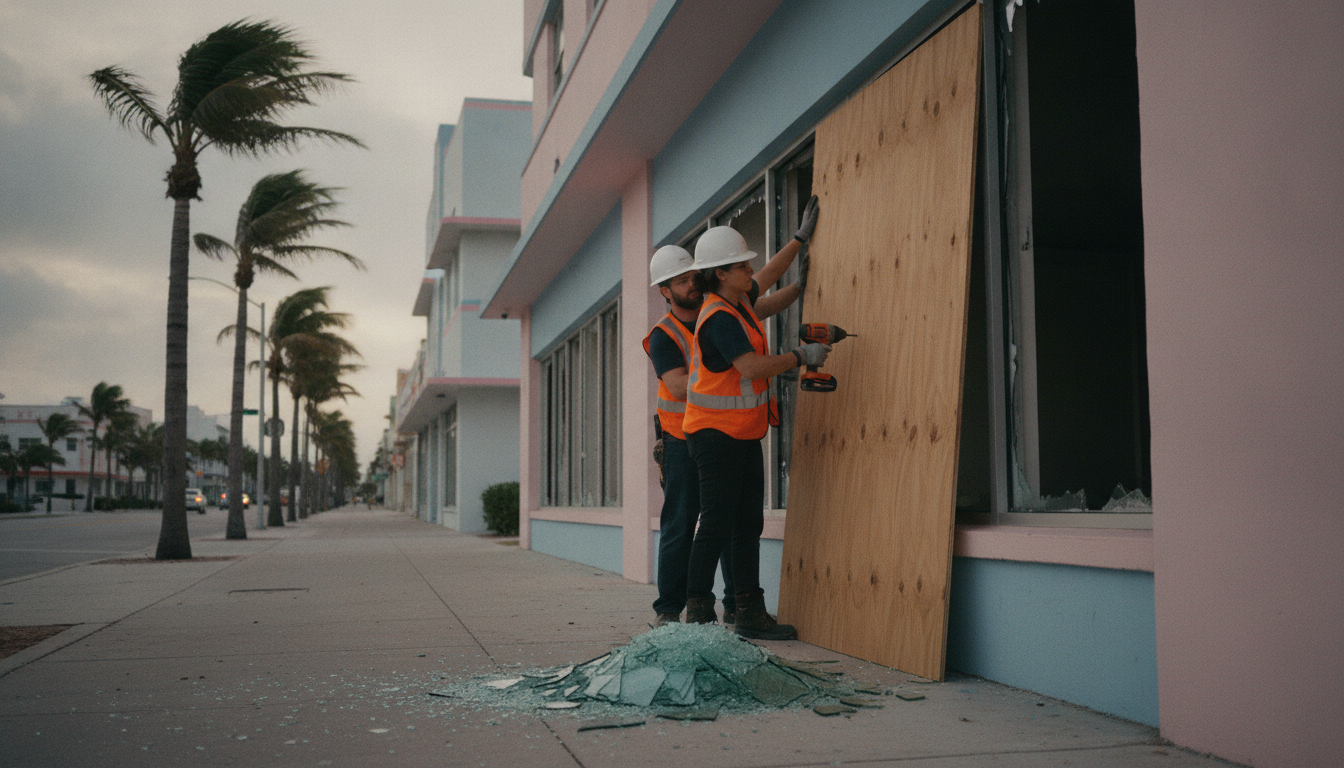
Emergency board-up and tarping in Miami is the temporary sealing of broken windows, doors, and roof openings after a storm to stop rain, wind, and intruders from causing further damage. Most insurers expect it within 24–72 hours of the loss, and it is the first step in any Miami storm damage repair.
Miami-Dade receives roughly 60 inches of rain a year, and much of it falls in short, heavy bursts during hurricane season (June 1 to November 30). A single missing section of shingles or a shattered window lets water into insulation, drywall, and electrical runs within hours. Mold can begin growing on wet drywall in 24–48 hours in South Florida humidity.
Insurance policies also carry a "duty to mitigate" clause. If you leave an opening exposed and rain causes secondary damage, the carrier can deny that portion of the claim. Temporary protection is both a safety measure and a claim-protection step.
| Factor | Board-Up | Tarping |
|---|---|---|
| Where it applies | Windows, doors, sliding glass, storefronts | Roofs, and sometimes exposed walls |
| Typical material | 5/8 inch or 3/4 inch plywood, screws, anchors | Heavy-duty polyethylene sheeting (often 6 mil or thicker), furring strips, cap nails |
| Main purpose | Security and wind-borne debris protection | Waterproofing |
| Expected duration | Weeks to months until glass is replaced | Roughly 30–90 days until roof repair |
| Common failure | Gaps at edges let rain blow in | Wind lifts poorly fastened edges |
Call for same day service when you see any of the following:
If a tree has hit the structure or you smell gas, leave the property first and call the utility and 911. Do not climb onto a storm-damaged roof yourself. Wet tile, hidden soft decking, and downed lines make DIY tarping a leading cause of post-storm injuries.
Work through these steps in order. The sequence protects both your safety and your insurance claim.
A tarp is a bridge, not a fix. A good installer fastens the sheeting over the ridge or high point, runs it down past the damaged area, and secures it with wood furring strips screwed into solid framing, not just nailed through the tarp. Sandbags or loose weights are not acceptable on a roof in Florida winds. Tiles may need to be lifted and the underlayment inspected, which a quick tarp job will skip.
Permanent roof leak repair depends on the roof type:
Miami-Dade requires permits for many roof repairs, and the High Velocity Hurricane Zone (HVHZ) rules govern materials and fastening. Confirm that your contractor is licensed and pulls permits when required.
Water damage restoration Miami homeowners need most often follows a predictable timeline. In the first 24 hours, remove standing water and wet contents. By 48 hours, expect mold risk on porous materials. By 72 hours, hidden moisture inside wall cavities can compromise insulation and framing.
Trade-offs to weigh:
After a major storm, demand outpaces supply and out-of-area crews arrive without licenses. Vet any provider with these questions:
A handyman team that offers Same Day Repair, electrical handyman work, and air conditioning service saves coordination time because one crew can secure the home, check circuits, and inspect the AC condenser for debris damage. If you are searching for a handyman near me or AC repair near me after a storm, prioritize a provider that documents each step.
Within 24 hours when possible, and no later than 72 hours. Most insurers require reasonable temporary protection promptly, and mold can start in 24–48 hours.
Most homeowners policies cover reasonable temporary repair costs as part of a covered loss. Keep receipts, photos, and invoices, and confirm limits and deductible with your carrier.
A professionally installed tarp typically lasts 30–90 days. Sun and wind degrade polyethylene, so schedule permanent roof repair as soon as the adjuster has inspected.
It is not recommended. Wet surfaces, hidden soft decking, and nearby power lines create serious fall and electrocution risk. Hire a trained crew instead.
Yes, if you can reach the panel safely and dry. Have a licensed electrician inspect wet wiring, outlets, and the panel before restoring power.
Call us today or fill out the form and we'll call you back within 2 business hours. Plans start at $69.99/mo.
1-833-426-3942