
Homeowner Tips & Guides
Miami's subtropical humidity, salt air, and sand demand flooring built to last. This guide ranks the top materials for Miami homes and properties, from porcelain tile to polished concrete.
The best flooring solutions for Miami homes are porcelain tile, luxury vinyl plank (LVP), and polished concrete. These three materials resist South Florida's humidity, salt air, and high foot traffic while maintaining visual appeal. Wood and carpet installations require specific moisture barriers and climate controls to perform reliably in Miami's subtropical environment.
Whether you manage a Brickell condominium, own a Coral Gables single-family home, or oversee a rental portfolio in Hialeah, choosing the right flooring is one of the highest-impact decisions you will make for your property. The wrong material buckles, warps, or grows mold within a year. The right material lasts 20–30 years with minimal maintenance.
Miami averages 61.9 inches of annual rainfall and humidity levels between 70–90% throughout the summer months. Temperatures rarely drop below 50°F, which means materials never get the cold-season "reset" that dries them out. This constant moisture cycle is the primary reason standard hardwood floors fail in Miami properties without extensive vapor barriers and climate-controlled rooms.
A second factor is salt air. Properties within 1 mile of the coast, including Miami Beach, Key Biscayne, and Coconut Grove waterfront homes, experience accelerated material degradation. Grout lines corrode, adhesives weaken, and untreated wood absorbs saline moisture more aggressively.
The third factor is foot traffic combined with sand. Miami residents track fine sand indoors constantly. Sand acts as an abrasive against soft flooring surfaces, scratching laminate and softwood finishes far faster than in drier climates.
Below is a structured comparison of the six most common flooring materials installed in Miami homes, ranked by overall suitability for South Florida conditions.
| Flooring Type | Humidity Resistance | Durability (Years) | Cost per Sq Ft (Installed) | Miami Rating |
|---|---|---|---|---|
| Porcelain Tile | Excellent | 30–50 | $8–$20 | ★★★★★ |
| Luxury Vinyl Plank (LVP) | Excellent | 15–25 | $5–$12 | ★★★★★ |
| Polished Concrete | Excellent | 25–40 | $6–$15 | ★★★★★ |
| Engineered Hardwood | Good (with barrier) | 10–20 | $10–$18 | ★★★☆☆ |
| Laminate | Poor | 5–10 | $4–$9 | ★★☆☆☆ |
| Carpet | Poor | 5–8 | $4–$10 | ★☆☆☆☆ |
Porcelain tile is the most widely installed flooring material in Miami homes for good reason. It absorbs less than 0.5% moisture, handles salt air without degrading, and stays cool underfoot even when outdoor temperatures reach 95°F. Large-format tiles (24x48 inches or 32x32 inches) are popular in modern Miami condos because they create a seamless, open appearance with fewer grout lines to maintain.
Rectified porcelain tiles allow grout joints as narrow as 1/16 inch, which reduces the surface area where mold and bacteria can accumulate. For Miami bathrooms, kitchens, and living areas, this is a direct health benefit, not just an aesthetic one.
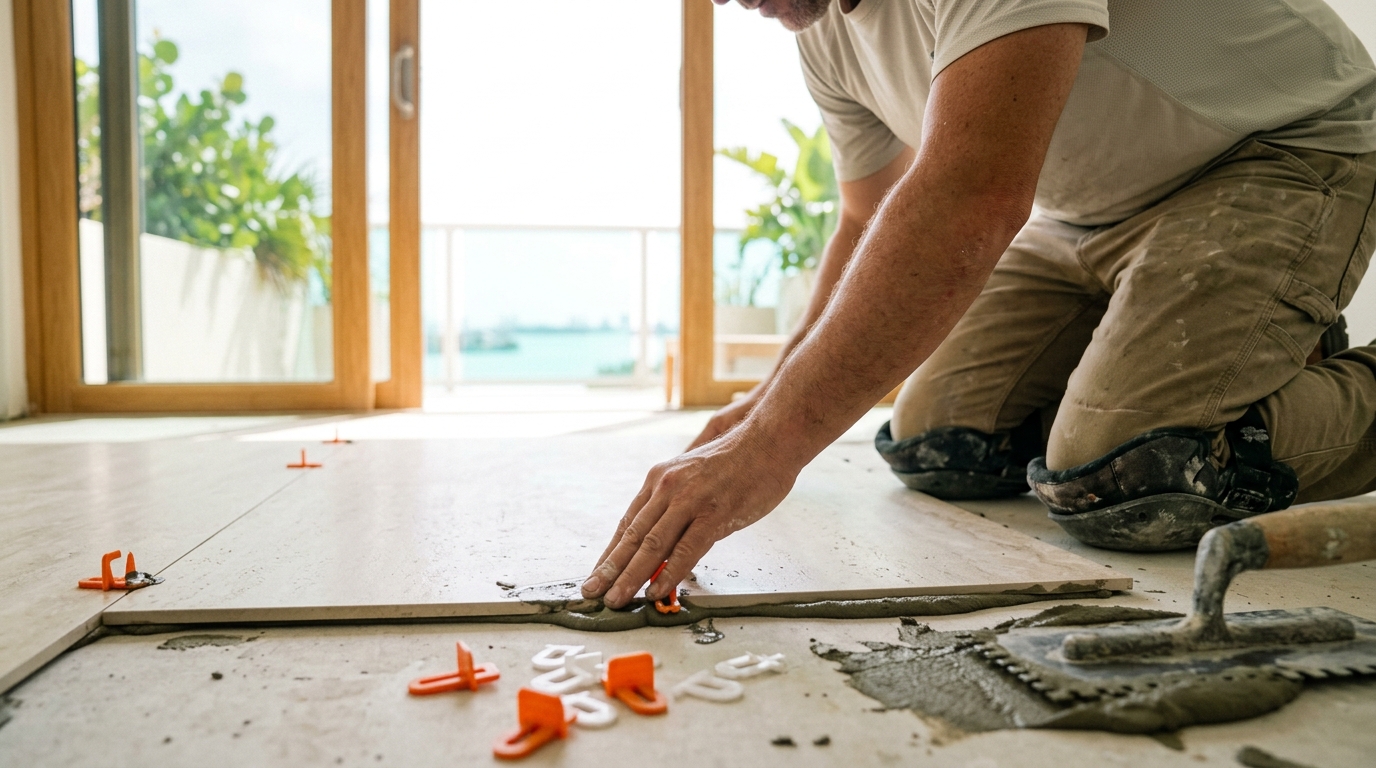
Professional installation matters significantly with porcelain. Tiles need a level substrate within 3/16 inch over 10 feet. Improper installation causes lippage, cracking, and hollow spots. A qualified handyman services team or licensed tile contractor can assess your subfloor before installation begins.
Luxury vinyl plank delivers the wood-look aesthetic that tenants and buyers expect, without the moisture vulnerability of real wood. Modern LVP products feature a 12–20 mil wear layer, locking click systems, and built-in underlayment that simplifies installation on concrete slabs, which are standard in Miami construction.
LVP performs well in Miami rental units for three specific reasons. First, it is 100% waterproof at the plank level, meaning spills and humidity do not penetrate the core. Second, it installs over existing tile without requiring demolition in most cases, which reduces renovation downtime. Third, individual planks replace easily when damaged, unlike tile that requires matching and re-grouting.
For apartment managers overseeing multiple units, LVP is the most cost-effective flooring upgrade available. A professional installation team offering same day repair can complete a standard 800-square-foot apartment in one business day.
Polished concrete has moved from commercial spaces into residential Miami properties over the past decade. Ground and polished to a high sheen, it reflects natural light effectively, a priority in the many ground-floor Miami homes with limited window exposure.
The material is inherently resistant to humidity, termites, and mold. It requires no adhesives or underlayments that could fail over time. Maintenance involves periodic resealing every 3–5 years and dust mopping. Radiant cooling systems integrate directly beneath polished concrete slabs, a combination growing in popularity in high-end Coconut Grove and Coral Gables renovations.
The primary limitation is hardness underfoot. Homeowners with young children or elderly family members often add area rugs to soften the surface in living and bedroom areas.
Engineered hardwood is not the automatic failure in Miami that solid hardwood is, but it requires strict conditions to perform reliably. The room must be climate-controlled year-round, maintaining indoor humidity between 35–55%. The subfloor needs a quality vapor barrier. And the wood species selection matters: teak, white oak, and hickory tolerate humidity swings better than softer species like pine or cherry.
Engineered hardwood belongs in climate-controlled bedrooms and formal living rooms, not in kitchens, bathrooms, or ground-floor rooms with slab-on-grade construction that tends to retain moisture. When installed correctly, it adds genuine value to luxury listings where buyers expect the warmth and character of real wood.
Several flooring tasks in Miami properties go beyond standard DIY capability and require licensed professionals or experienced handyman services:
A reliable local team providing handyman near me services can handle installation, subfloor prep, and transition work under one appointment, reducing the coordination burden for homeowners and property managers.
Reputable flooring and handyman service providers in Miami back their work with a one year warranty covering installation defects, adhesive failures, and subfloor preparation errors. This warranty protects homeowners from callback costs when issues surface during the first year, which is the most common window for installation-related problems to appear.
Same day repair service is available for flooring emergencies including cracked tiles, lifted LVP planks, and damaged transitions. Property managers handling tenant complaints benefit directly from a service team that dispatches the same day rather than scheduling weeks out.
When selecting a flooring installer or handyman in Miami, confirm that they carry general liability insurance of at least $1,000,000 per occurrence and hold a current Miami-Dade contractor registration.
Porcelain tile is the best flooring for a Miami Beach condo near the ocean. It resists salt air, high humidity, and moisture completely. Large-format rectified porcelain tiles (24x24 inches or larger) with epoxy grout deliver the longest service life in coastal environments.
You can install engineered hardwood in interior, climate-controlled rooms in a Miami home if you maintain indoor humidity between 35–55% year-round and install a quality vapor barrier over the subfloor. Solid hardwood is not recommended for any room in Miami due to the consistently high ambient humidity.
A professional LVP installation in a standard Miami apartment or home (600–1,000 square feet) takes 1–2 days, including subfloor preparation. Properties requiring tile removal before installation add 1 additional day for demolition and debris removal.
Most residential flooring replacements in Miami-Dade County do not require a building permit when replacing like-for-like materials at the same elevation. Structural subfloor repairs, radiant floor system installations, and changes that affect the building envelope require permits. Always confirm with Miami-Dade Building Department before beginning work.
A one year warranty on flooring installation covers defects in the installation workmanship, including improper adhesive application, inadequate subfloor leveling, tile lippage, grout failures, and improperly seated click-lock planks. It does not cover damage from flooding, abuse, or product manufacturing defects, which fall under the material manufacturer's separate warranty.
Call us today or fill out the form and we'll call you back within 2 business hours. Plans start at $69.99/mo.
1-833-426-3942