
Homeowner Tips & Guides
Grout problems fall into three categories: dirty, damaged, or structurally failed. This guide helps Miami homeowners identify which issue they have and choose the right solution for South Florida's humid, hard-water conditions.
Grout in poor condition falls into one of three categories: dirty, damaged, or structurally failed. Identifying which category applies to your grout determines the correct fix and prevents you from spending money on the wrong solution. This guide covers every stage of grout assessment, with specific guidance for Miami homeowners dealing with high humidity, hard water, and the accelerated wear that South Florida's climate puts on bathroom and kitchen tile.
Miami's average indoor humidity regularly exceeds 70% during summer months, and hard water with high mineral content flows through most Broward and Miami-Dade properties. These two factors combine to stain, crack, and erode grout faster than in drier climates. Bathroom tile in Florida bathrooms can show visible grout discoloration within 12–18 months of installation if the grout was not sealed properly at the time of tile installation. Kitchen floors face a similar problem from cooking grease and acidic cleaning agents that break down grout sealant.
Understanding this local context matters because a handyman or tile professional assessing your grout in Miami will factor in these conditions before recommending a cleaning, repair, or replacement approach.
Dirty grout is the most common issue and the least expensive to address. Surface contamination does not compromise the structural integrity of the grout joint. You need cleaning only when you observe the following signs:
Professional grout cleaning in Miami typically uses steam cleaning equipment or alkaline cleaners rated for the grout type. Sanded grout used in floor tile applications and unsanded grout used in bathroom wall tile require different chemical strengths. After a thorough professional cleaning, a fresh application of penetrating grout sealer protects the joints for 12–24 months depending on traffic and moisture exposure.
Grout repair is appropriate when the joint material is cracking, crumbling, or missing in isolated sections but the surrounding tile remains firmly bonded to the substrate. Signs that point to repair rather than full replacement include:
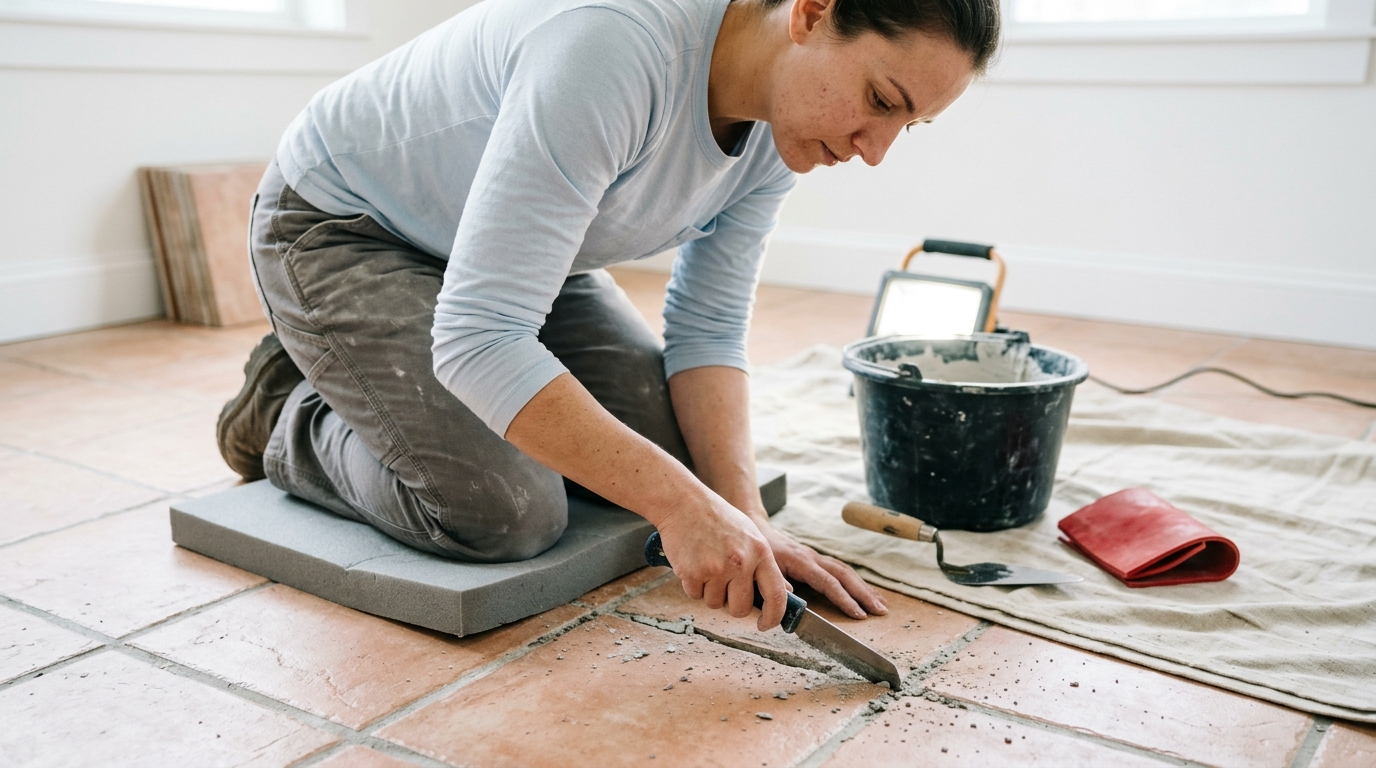
A floor tile repair in Miami for isolated grout failure involves removing the compromised material with a grout saw or oscillating tool, vacuuming the joint clean, and re-grouting with a matching product. Color-matching existing grout is a skilled task. Epoxy grout is frequently specified for Miami bathroom and kitchen repairs because it resists moisture and mold growth better than standard cement-based grout in high-humidity environments.
Full grout removal and replacement is necessary when the failure is widespread or when underlying issues have compromised the tile installation itself. Replacement becomes the correct call under these conditions:
Full regrout projects in a Miami bathroom or kitchen also present an opportunity to upgrade to a higher-performance product. Epoxy grout, glass-fiber-reinforced grout, and pre-sealed grout options are all worth discussing with a tile installation professional before committing to a product for your specific Florida conditions.
| Condition Sign | Recommended Action | Typical Scope | Best Grout Product for Miami |
|---|---|---|---|
| Surface staining, soap scum, mildew spots | Professional cleaning and resealing | Entire surface | Penetrating sealer post-clean |
| Hairline cracks, isolated missing sections | Spot repair with matched grout | Affected joints only | Epoxy or pre-colored cement grout |
| Widespread crumbling, loose tiles, recurring mold | Full removal and replacement | Full floor or wall section | Epoxy grout or glass-fiber-reinforced grout |
| Substrate water damage beneath tile | Tile removal, substrate repair, reinstallation | Full tile installation project | Waterproof backer board plus epoxy grout |
When a full tile installation is on the table, Miami homeowners and apartment managers should prioritize materials rated for high-moisture environments. Porcelain tile with a water absorption rate below 0.5% is the standard specification for Florida bathroom floors and shower walls. Large-format tiles in sizes such as 24x24 or 12x24 inches are popular in current bathroom tile ideas in Florida because they reduce the number of grout joints, which directly reduces the surface area that can absorb moisture and harbor mold.
Grout joint width also matters. Larger tiles tolerate joints as narrow as 1/16 inch, while hand-cut or natural stone tiles require joints of 1/8 inch or wider. Narrower joints stay cleaner longer but require more precise tile installation to maintain consistent spacing. A licensed handyman or tile installer familiar with Miami's building codes and humidity conditions will specify the correct joint width and grout product combination from the start, preventing premature grout failure.
Grout cleaning using a brush and store-bought cleaner is a reasonable DIY task for small areas. Everything beyond that benefits from professional assessment. A same day handyman service can evaluate your grout condition, identify whether moisture has reached the substrate, and perform spot repairs the same visit for most bathroom and kitchen tile situations. For full tile installation or substrate-level water damage, a professional with tile experience and access to the correct tools, adhesives, and grout products will deliver results that last.
Look for a service that offers a one year warranty on grout repair and tile installation work. A warranty signals that the provider stands behind the materials and installation method used, which is especially important in Miami's demanding climate. Same day repair availability is also a practical consideration for apartment managers dealing with tenant complaints or homeowners preparing a property for sale or rental.
Properly installed and sealed cement-based grout in a Miami bathroom lasts 8–15 years before requiring full replacement. High-humidity conditions and hard water shorten that range to 5–8 years without annual resealing. Epoxy grout lasts 20+ years in the same conditions and does not require sealing.
Epoxy grout is the top-performing option for Florida shower walls. It resists moisture absorption, resists mold growth, and does not require sealing. Standard cement-based grout is acceptable when sealed annually but requires more maintenance in South Florida's high-humidity environment.
A skilled handyman can perform grout cleaning, resealing, and spot repairs on most residential tile surfaces. Full tile removal, substrate repair, and new tile installation on large surfaces typically require a licensed tile contractor in Miami-Dade County. Always verify licensing and ask about a one year warranty before authorizing work.
Tap each tile with a knuckle or coin. A solid thud indicates good adhesion. A hollow or clicking sound means the adhesive beneath has failed. Isolated hollow tiles can often be re-bonded by drilling small holes through the grout joint and injecting epoxy adhesive. Widespread hollowness across more than 25% of a surface requires full floor tile repair or reinstallation.
Most same day handyman services in Miami can assess grout condition and complete cleaning or spot repair within a single visit of 2–4 hours for a standard bathroom. Full regrout of a bathroom floor typically takes 4–6 hours plus a 24-hour cure period before the surface can be used. Scheduling early in the day gives the grout adequate cure time before evening use.
Call us today or fill out the form and we'll call you back within 2 business hours. Plans start at $69.99/mo.
1-833-426-3942