
Homeowner Tips & Guides
A tripped breaker is often minor - but recurring trips, flickering lights, or burning smells mean it's time to call a licensed Miami electrician. Learn how to spot the difference before it becomes dangerous.
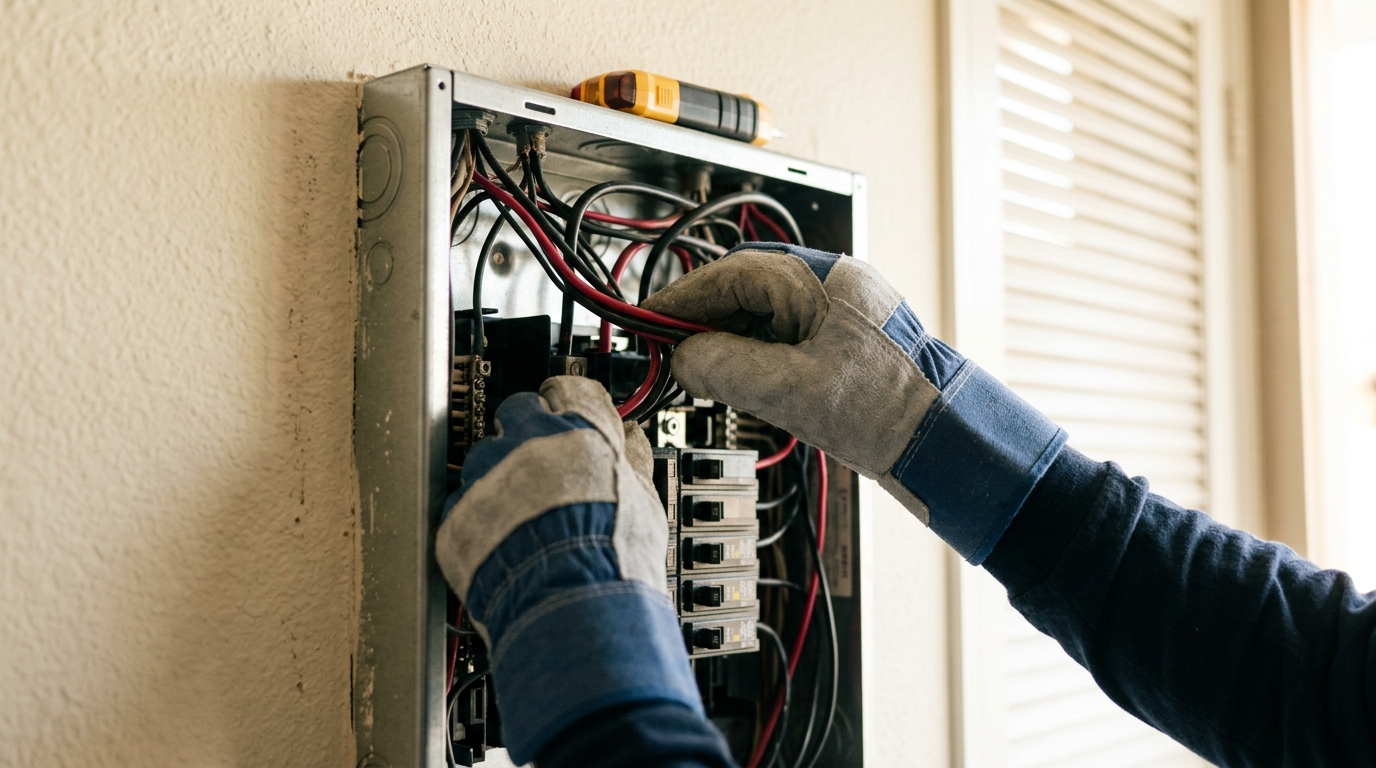
A tripped breaker is the most common cause of sudden power loss in a single room or circuit - but recurring trips, flickering lights, or burning smells signal a deeper electrical problem that requires a licensed Miami electrician or qualified electrical handyman immediately. Knowing the difference between a minor nuisance and a genuine safety hazard can protect your home, your appliances, and your family.
Miami's climate adds pressure to residential electrical systems that homeowners in cooler states rarely experience. High humidity accelerates corrosion on outlets and wiring connections, and the region's heavy AC usage pushes circuits close to their rated limits for months at a time. The result: Miami homes tend to develop electrical issues faster than the national average.
Before reaching for the phone, run through this quick safety checklist. These steps are safe for any homeowner and require no tools:
Use this table to assess whether you are dealing with a routine fix or a situation that demands professional home electrical repair right away.
Miami's average relative humidity sits above 75% for most of the year. That moisture works into outlet boxes, panel lugs, and wire connections, causing oxidation that increases resistance and generates heat. Outlets that feel warm to the touch - even with nothing plugged in - often have corroded connections inside the box. A licensed electrical handyman in Miami should inspect and clean or replace these connections before they progress to an arc fault.
Many Miami homes built between 1965 and 1973 were wired with aluminum branch-circuit wiring instead of copper. Aluminum expands and contracts more than copper with heat cycles, causing connections to loosen over time. The U.S. Consumer Product Safety Commission has documented that aluminum-wired homes face a significantly higher risk of electrical fires. If your home was built in that era, schedule an inspection with a Miami electrician who can assess the wiring and, if necessary, install CO/ALR-rated outlets or conduct a whole-home remediation.
A 100-amp panel was standard for Miami homes built before the 1990s. Today's households routinely run central AC systems, EV chargers, multiple refrigerators, and home offices simultaneously. That load frequently exceeds what a 100-amp service can handle safely. Repeated tripping, breakers that feel warm, or a humming panel are signs your service needs an upgrade to 200 amps - a task requiring a licensed electrician and a Miami-Dade permit.
Not every electrical issue demands a licensed master electrician. A qualified electrical handyman in Miami can handle a wide range of residential tasks quickly, often with a same day repair turnaround and backed by a one year warranty on labor:
For any of these tasks, a local electrical handyman near you in Miami provides a faster and more cost-effective solution than scheduling a full electrical contractor appointment - especially for apartment managers and property owners juggling multiple units.
Florida Statute 489.505 defines work that requires a licensed electrical contractor. Attempting these tasks without a license voids homeowner's insurance coverage and creates liability. Always hire a licensed Miami electrician for:
Whether you manage a single-family home in Coral Gables, a rental unit in Brickell, or a multi-unit property in Hialeah, fast access to a reliable handyman near you in Miami makes the difference between a minor inconvenience and a prolonged outage. Look for a service provider that offers same day repair scheduling, carries proper licensing and insurance, and backs their work with a one year warranty on parts and labor.
For issues beyond a standard handyman's scope - panel work, new circuits, or permitted wiring projects - a licensed Miami electrician on the same team means you get the right technician for the job without calling multiple companies.
Call a professional immediately if you notice a burning smell, scorch marks around an outlet or panel, a breaker that is hot to the touch, flickering lights throughout the entire home, or any outlet that sparks when you plug something in. These signs indicate active arcing or overheating - conditions that can cause a house fire within minutes. Do not wait for a scheduled appointment; request same day repair service.
Yes. In Florida, replacing like-for-like devices - such as swapping a standard outlet for a new standard or GFCI outlet, or replacing an existing light fixture on existing wiring - falls within the scope of work a qualified electrical handyman can perform legally without a separate electrical contractor license. New circuit installation, panel work, and any task requiring a permit must be handled by a licensed Miami electrician.
Repeated tripping on the same circuit means one of three things: the circuit is consistently overloaded (too many devices sharing the same 15- or 20-amp breaker), there is a short circuit caused by damaged wire insulation or a faulty appliance, or the breaker itself has worn out and no longer holds its rated load. An electrician will use a clamp meter to measure actual current draw and identify which of these is the root cause before recommending a repair.
Panel upgrades in Miami typically range from $1,800 to $4,500 depending on the size of the new service (100A, 200A, or 400A), the condition of the existing wiring, and Miami-Dade permitting fees. Costs vary by contractor and project complexity. Always get at least two written quotes from licensed Miami electricians and confirm that the price includes permit acquisition and the required utility coordination with FPL.
Standard homeowner's insurance covers sudden and accidental damage caused by electrical events - such as a lightning strike or an electrical fire - but does not cover repairs to worn-out wiring, outdated panels, or maintenance-related issues. If an electrical failure causes fire or appliance damage, your claim is far more likely to be honored when the underlying work was performed by a licensed electrician with proper permits. Unpermitted work is one of the most common reasons insurers deny electrical damage claims in Florida.
Call us today or fill out the form and we'll call you back within 2 business hours. Plans start at $69.99/mo.
1-833-426-3942