
Homeowner Tips & Guides
A prioritized checklist for Miami storm damage repair: secure hazards, stop water entry, dry materials within 24–48 hours, document for insurance, then plan permanent repairs. Learn what needs a licensed pro now.
After a hurricane or severe storm in Miami, repair in this order: 1) safety hazards (electrical, gas, structural), 2) stopping water entry (roof, windows, doors), 3) drying wet materials within 24–48 hours, 4) documenting everything for insurance, 5) permanent repairs. This checklist helps homeowners, apartment managers, and property caretakers assess damage and decide what needs a licensed professional now and what can wait.
Do not enter a flooded or storm-damaged structure until you have checked for the three hazards that cause most post-storm injuries.
Generators belong outdoors, at least 20 feet from windows and doors. Carbon monoxide from indoor or garage-placed generators remains a leading cause of post-hurricane deaths in Florida.
Insurers require proof of the condition of your home before cleanup. Spend 30–45 minutes documenting before you move debris.
Check your hurricane deductible. Many Miami-Dade policies carry a separate percentage deductible, commonly 2%, 5%, or 10% of dwelling coverage, which means smaller repairs may fall below the claim threshold. A $400,000 dwelling with a 2% deductible means the first $8,000 is yours.
Roof leak repair after a storm starts with a temporary seal, not a full replacement. Miami roofs fail in predictable places, and knowing them speeds up the inspection.
Temporary protection means heavy-duty reinforced tarps, secured with 1x3 furring strips screwed into the roof deck, not nails through the tarp. Extend the tarp over the ridge so water cannot run beneath it. Do not walk a wet or damaged roof. A handyman or roofer can tarp in an hour or two, and that invoice is typically a reimbursable mitigation cost.
Under Florida's 25% rule history and current building code provisions, repairs affecting a large portion of a roof may trigger upgrade requirements. Ask your contractor whether the permit scope changes the repair into a replacement.
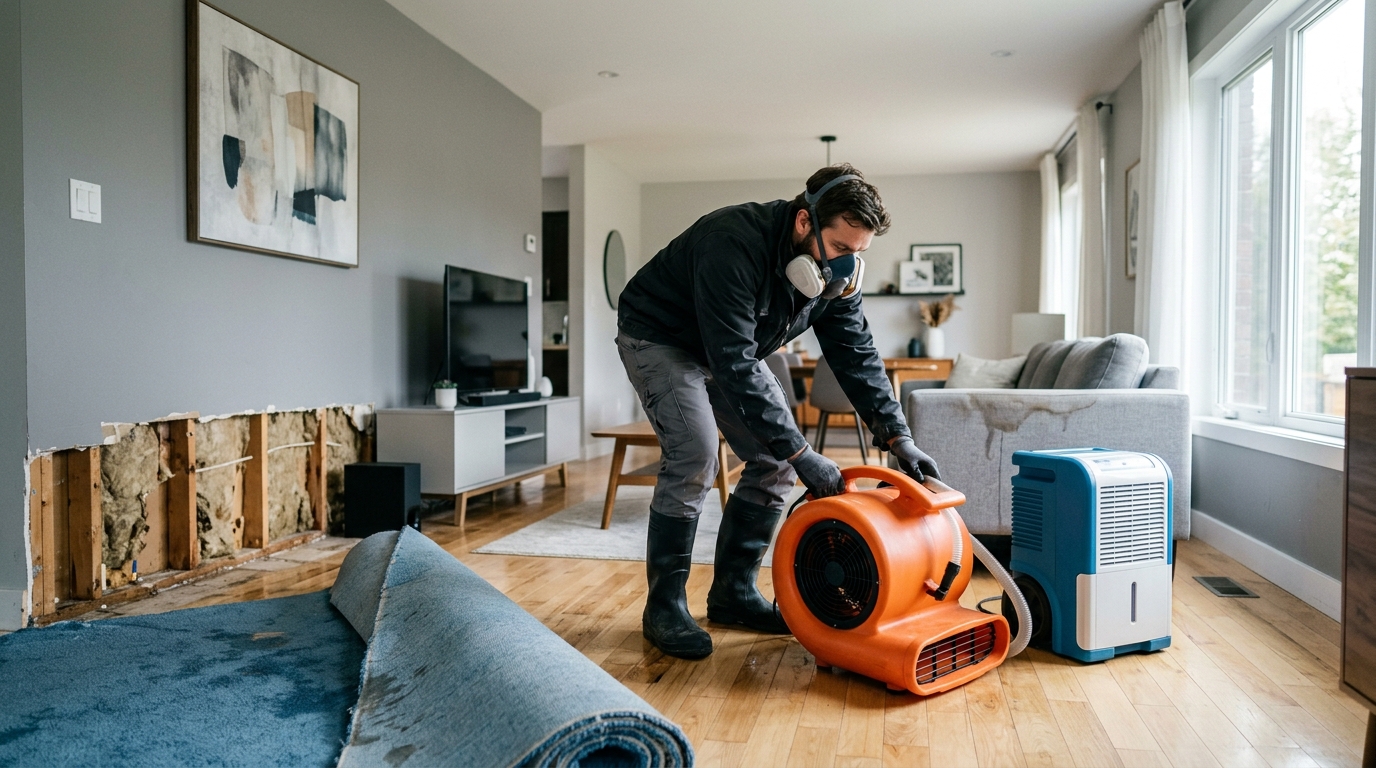
Miami's humidity makes water damage restoration time-sensitive. Mold can begin colonizing wet drywall, insulation, and wood within 24–48 hours, and indoor humidity above 60% accelerates it.
Categorize the water first, because it determines what can be saved:
| Water Category | Source | What to Do |
|---|---|---|
| Category 1 (clean) | Roof leak, broken supply line | Extract, dry, and often save drywall and flooring |
| Category 2 (gray) | Appliance overflow, rain through walls with contaminants | Remove carpet and padding, clean and dry hard surfaces |
| Category 3 (black) | Storm surge, sewage backup, standing floodwater | Remove porous materials, disinfect, use professionals |
Practical drying steps for Category 1 water: remove standing water with a wet vac, pull up wet carpet pad, run dehumidifiers and air movers continuously, and cut drywall 12–24 inches above the visible water line if wicking has occurred. Run the air conditioner to pull moisture, but only after confirming the unit and its electrical connections are dry and undamaged. Wet insulation holds moisture and must be removed, because it does not dry in place.
Moisture meters matter. Drywall reading above roughly 16% moisture content needs further drying or replacement. A surface that feels dry can still hold water inside the wall cavity.
Outdoor condensers sit directly in the path of storm debris and surge. Before restarting, check these items:
Power surges after grid restoration often damage capacitors and control boards. A technician can test these quickly. An AC repair near me search during peak post-storm weeks returns long wait times, so book early and mention if you have elderly residents or medical needs.
Broken glass and failed door seals let rain in and invite theft. Board openings with 5/8-inch plywood anchored into framing, not just the trim. For impact windows with a cracked pane, the laminated interlayer may still hold, but the seal is compromised and the unit should be evaluated for replacement.
Garage doors are the most common wind failure point. A bent track or bowed panel can pull the door off its rails and compromise the whole opening. Repair promptly, since a damaged garage door weakens the building envelope in the next storm.
Fences, screen enclosures, and soffits are lower priority but still matter. Missing soffit panels allow wind-driven rain into the attic, which then becomes a ceiling leak weeks later.
| Priority | Task | Timeframe |
|---|---|---|
| 1. Life safety | Electrical, gas, structural hazards | Immediately |
| 2. Weatherproofing | Roof tarp, board-up windows | Within 24 hours |
| 3. Moisture control | Extraction, drying, removal of wet insulation | 24–48 hours |
| 4. Systems | Panel, outlets, AC, water heater | Within days |
| 5. Permanent repairs | Roofing, drywall, flooring, paint | Weeks, after claim approval |
Storm chasers arrive within days and often leave unfinished work. Verify any contractor against the Florida DBPR license database, request proof of liability insurance, and get written scope and pricing. Never sign an assignment of benefits form without legal review, and never pay more than a modest deposit upfront. Local firms offering a One Year Warranty on workmanship and Same Day Repair for urgent items like tarping, outlet replacement, or AC diagnostics give you accountability that out-of-town crews cannot.
A good same day handyman can handle many small repairs: patching drywall, replacing outlets and fixtures, resealing door thresholds, and securing fences. Licensed work such as panel replacement, rewiring, and AC compressor repair needs a Miami electrician or HVAC contractor. Using the wrong trade creates permit and insurance problems.
Begin within 24 hours. Extract standing water and start dehumidification immediately, because mold can form within 24–48 hours in Miami's humid climate.
Homeowners can, but it is dangerous on wet or damaged roofs. A professional can install a reinforced tarp secured with furring strips in one to two hours, and the cost is generally reimbursable under most policies as a reasonable mitigation expense.
No, not if water reached outlets, switches, or the panel. A licensed electrician must inspect and test the system first. Submerged breakers and wiring can fail or cause fires after power is restored.
Most homeowner policies cover reasonable temporary repairs that prevent further damage, such as tarping and board-ups. Keep receipts and photos, and review your policy for the exact terms and your hurricane deductible.
Only if the outdoor unit was not submerged and the electrical connections are dry and undamaged. Check the drain line and filter first. If any doubt exists, schedule a technician before restarting it.
Call us today or fill out the form and we'll call you back within 2 business hours. Plans start at $69.99/mo.
1-833-426-3942