
Homeowner Tips & Guides
South Florida's humidity and thermal cycling are tough on tile. Discover the three most common causes of loose or cracked tiles in Miami homes and what proper tile installation practices can do to stop them.
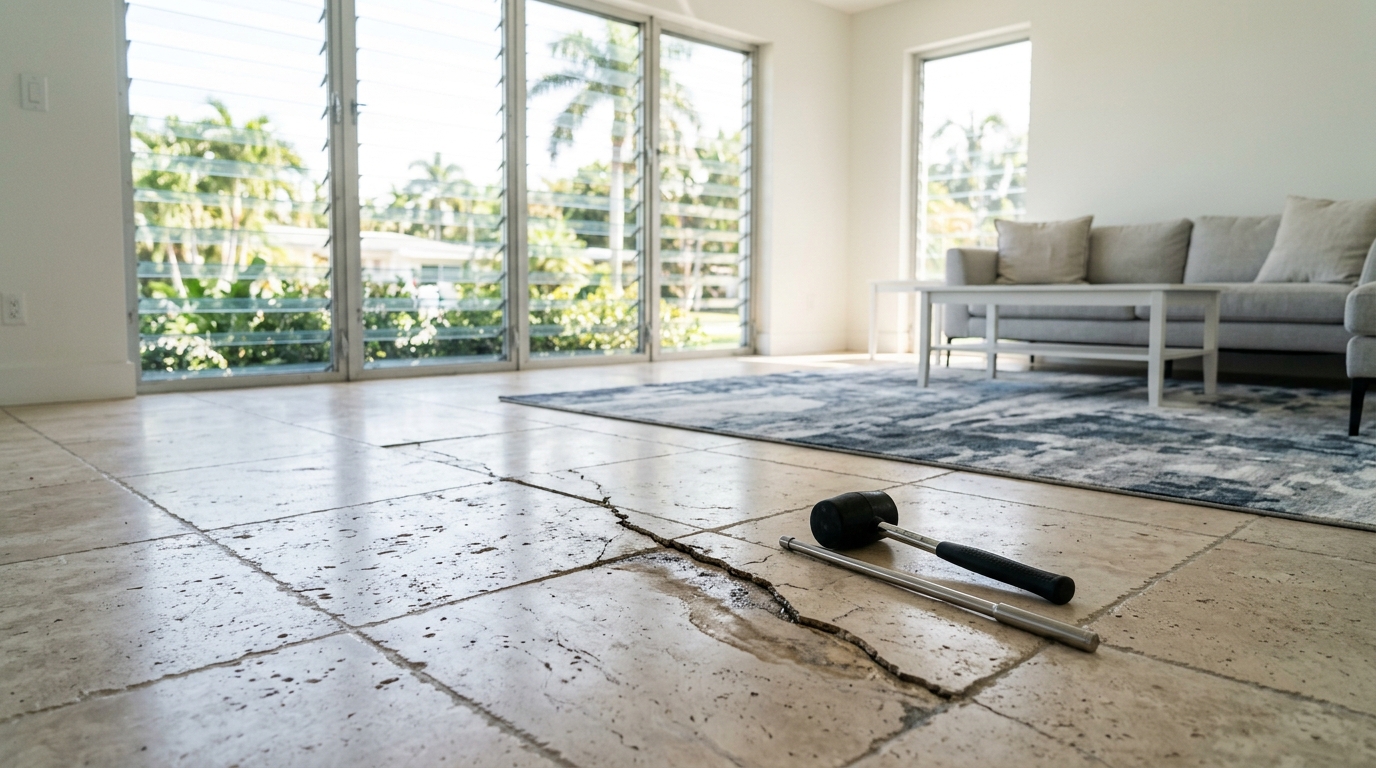
Loose or cracked tiles in South Florida homes are caused by three primary factors: extreme humidity fluctuations that expand and contract the substrate, improper mortar coverage during tile installation, and inadequate grout joint maintenance that allows moisture intrusion. Understanding each cause helps homeowners and apartment managers prevent costly repairs and know when to call a professional for floor tile repair in Miami.
Miami's climate sits at an average annual humidity level above 75%, with interior temperature swings that occur daily as air conditioning cycles on and off. That thermal cycling forces tile, grout, adhesive, and the concrete substrate beneath to expand and contract at different rates. Over time, those repeated micro-movements break the bond between tile and mortar, producing the hollow "drum" sound you hear when you tap a loose tile. Recognizing this regional reality is the starting point for every smart tile installation in Miami.
Industry standards set by the Tile Council of North America require at least 80% mortar contact on the back of each tile in dry areas and 95% contact in wet areas like bathrooms and showers. In South Florida's high-humidity environment, many failed installations fall well below those benchmarks because installers rush, use the wrong thinset formula, or skip back-buttering entirely.
When mortar coverage is insufficient, air pockets form beneath the tile. Those voids collect moisture, allow the tile to flex under foot traffic, and accelerate bond failure. A single missed step during tile installation in Miami can turn a $2,000 bathroom floor into a $5,000 replacement job within two to three years.
Best practices for proper mortar coverage in Miami properties:
Concrete slabs in South Florida absorb ground moisture year-round, particularly in homes built on grade with no vapor barrier. Wood subfloors in older Miami properties flex significantly when the building's air conditioning is turned off for extended periods, which is common in seasonal rental units and vacant apartments. Both scenarios create movement that tile and rigid grout cannot accommodate without cracking.
The solution is a combination of the right substrate preparation and strategic placement of movement joints. Industry guidelines call for movement joints every 20–25 feet in interior applications and every 8–12 feet in exterior or high-moisture zones. In South Florida, applying those guidelines conservatively (smaller intervals) dramatically reduces callback rates for cracked tiles.
Substrate types and their risk levels for Miami tile projects:
| Substrate Type | Movement Risk Level | Recommended Solution |
|---|---|---|
| Concrete slab on grade | Moderate | Vapor barrier + crack-isolation membrane |
| Wood subfloor (plywood) | High | Uncoupling membrane (e.g., Schluter Ditra) |
| Existing tile over concrete | High | Remove existing tile; re-evaluate flatness |
| Cement backer board | Low | Proper fastener spacing; seam tape |
| Gypsum-based underlayment | Very High (wet areas) | Replace with cement board in bathrooms |
Grout is the first line of defense against water reaching the mortar bed and substrate beneath your tile. In South Florida bathrooms and kitchens, steam, condensation, and cleaning chemicals degrade unsanded and sanded grout alike. Cracked or missing grout joints allow water to undermine the tile bond from below, producing loose tiles that feel soft underfoot before they crack entirely.
Regular grout cleaning in Miami is not just cosmetic. Mold and mildew colonies that form in grout lines actually accelerate grout breakdown through enzymatic activity. A professional grout cleaning followed by sealer application every 12–18 months extends grout life significantly and prevents the moisture intrusion that leads to expensive tile replacements.
Signs your grout joints need immediate attention:
Not every tile performs equally in South Florida's environment. Bathroom tile ideas in Florida should prioritize low water absorption ratings (below 0.5% for porcelain) and slip resistance coefficients appropriate for wet surfaces. Large-format porcelain tiles (24x24 inches and larger) are the current standard in Miami renovations because they have fewer grout joints, reducing the total number of potential moisture entry points.
Natural stone tiles like marble and travertine, popular in luxury Miami properties, require additional sealing and are more porous than porcelain. They perform well when properly sealed and maintained but fail quickly when grout care is neglected. Ceramic tiles remain a cost-effective option for dry interior areas but are not recommended for shower floors or exterior applications due to higher water absorption rates.
Floor tile repair in Miami is cost-effective when the damage is localized to a small area and the surrounding tile bond is intact. A professional can re-bond loose tiles using appropriate adhesive injected beneath the tile surface without full demolition. Cracked tiles with no substrate movement can be replaced individually if matching tile stock is available.
Full replacement is necessary when:
A same day handyman inspection can identify whether repair or replacement is the right path before you commit to a larger project budget.
A qualified tile contractor or handyman near you in Miami should provide a written assessment of the cause before quoting a repair. Avoid any service that skips substrate evaluation and jumps straight to resetting tiles without addressing the root cause. That approach produces repeat failures within 12–18 months.
Quality tile work in Miami should include a one year warranty on labor and installation. That warranty signal tells you the contractor stands behind their mortar coverage, substrate preparation, and grout application. Ask specifically about warranty terms before signing any agreement for tile installation in Miami.
The most common cause is insufficient mortar coverage beneath the tile combined with humidity-driven substrate movement. When air pockets form under tiles in high-humidity Miami bathrooms, moisture collects in those voids and the tile flexes under load until it cracks. Proper back-buttering and 95% mortar contact prevent this failure mode.
Grout in South Florida bathrooms and kitchens should be professionally cleaned and resealed every 12–18 months. The combination of humidity, heat, and frequent cleaning chemical exposure degrades sealer faster than in drier climates. Regular grout cleaning in Miami also prevents mold colonies that accelerate grout breakdown.
Yes, if fewer than 20% of tiles are loose and the substrate is sound, a technician can inject adhesive beneath the tile to re-bond it without demolition. Floor tile repair in Miami using this method is significantly less expensive than full replacement and can often be completed the same day.
Porcelain tile with a water absorption rate below 0.5% is the best choice for Florida bathrooms and kitchens. Large-format porcelain (24x24 inches or larger) reduces the number of grout joints, which are the primary entry points for moisture. For wet areas, choose a tile with a Dynamic Coefficient of Friction (DCOF) rating of 0.42 or higher for slip resistance.
Same day repair is necessary when water is actively leaking through cracked grout or a missing tile into a ceiling or wall below, or when a cracked tile creates a sharp edge that poses a safety hazard. Loose tiles without water intrusion or sharp edges can be scheduled within a normal appointment window, but do not delay beyond 2–3 weeks, as moisture damage to the substrate compounds quickly in Miami's humid environment.
Call us today or fill out the form and we'll call you back within 2 business hours. Plans start at $69.99/mo.
1-833-426-3942