
Homeowner Tips & Guides
Miami homeowners need a solid hurricane prep checklist covering evacuation zones, storm shutters, emergency supplies, and a restoration plan. This 2026 guide walks through every phase, from pre-storm hardening to post-storm repairs.
Miami homeowners need to complete hurricane preparation at least 72 hours before a storm makes landfall, covering structural protection, utility shutoffs, emergency supplies, and a documented restoration plan. This checklist addresses every phase: pre-storm hardening, immediate post-storm safety, and the repair and restoration work that follows a direct hit.
Miami-Dade County uses a mandatory evacuation zone system with zones A through F, ranked by storm surge vulnerability. Zone A properties sit closest to the coast and face the highest surge risk even in a Category 1 storm. Before spending money on window protection or a generator, look up your official zone at the Miami-Dade Emergency Management portal and determine whether your property sits inside a Special Flood Hazard Area (SFHA) on FEMA's current flood maps.
That zone designation controls several practical decisions. Zone A and B homeowners need an evacuation plan that does not rely on local roads staying passable, because surge flooding can cut off neighborhoods within hours of a storm's outer bands arriving. Zone D and E homeowners in inland areas face lower surge risk but higher wind exposure in a major storm, which changes the priority order of their preparations.
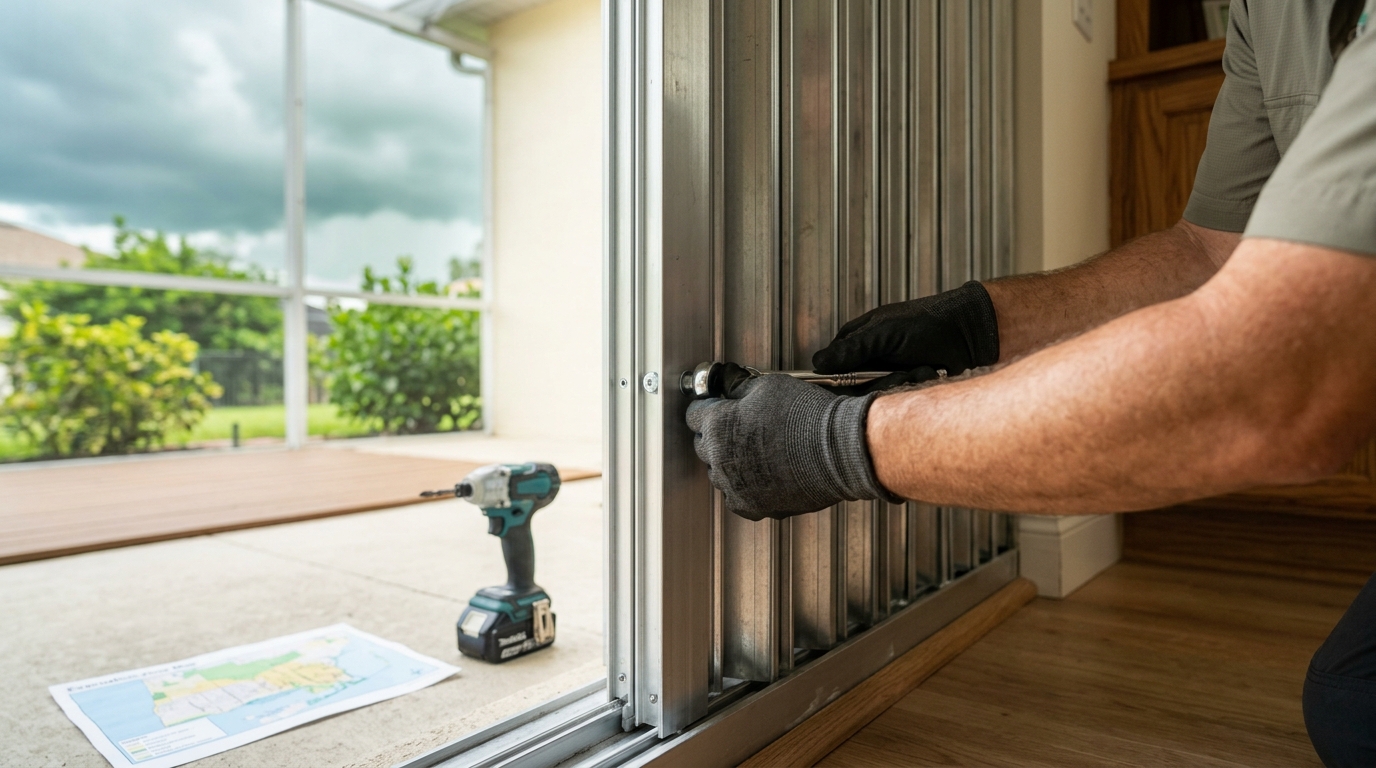
Storm shutter installation is the single highest-impact action a Miami homeowner can take before hurricane season. Open windows and doors are the primary way wind pressure enters a structure and causes roof failure. Miami-Dade County enforces one of the strictest product approval standards in the country: any hurricane protection product must carry a Miami-Dade Notice of Acceptance (NOA) to be legally installed.
The three main shutter types differ significantly in cost, labor, and protection level:
| Shutter Type | Protection Level | Deployment Method | Best For |
|---|---|---|---|
| Accordion Shutters | Meets Miami-Dade NOA; high impact resistance | One-person fold-and-latch; 5–10 minutes per opening | Primary windows, doors, and lanais on long-term owner-occupied homes |
| Panel Shutters (aluminum or steel) | Meets Miami-Dade NOA; comparable resistance | Manual panel installation; requires storage space and two people for large panels | Homeowners with storage space who want a lower upfront cost |
| Roll-Down Shutters (motorized) | Highest protection; full perimeter seal | Button or switch; seconds per opening | Large openings, second floors, and homeowners with mobility limitations |
| Impact-Resistant Windows | Permanent laminated glass; no deployment needed | Passive; always active | Full replacement projects during renovation or new construction |
If your home still has single-pane windows without shutters or impact glass, that is where your budget goes first. A licensed handyman or window contractor can install accordion shutters on a standard three-bedroom, two-bathroom Miami home in one to two days. Always verify the installer is pulling the required Miami-Dade permit, because unpermitted shutter work creates insurance complications after a storm.
When the National Hurricane Center posts a watch for South Florida, you have roughly 48–72 hours before tropical storm-force winds make outdoor work dangerous. Use that window in priority order.
A standard residential garage door is the largest and structurally weakest opening in most Miami homes. During Hurricane Andrew in 1992, garage door failures contributed directly to widespread roof collapses because the loss of that panel allowed wind to pressurize the interior. A retrofit bracing kit, installed by a qualified handyman, reinforces the door's horizontal tracks and can be completed in under four hours. If your door was manufactured before 2002 and has never been replaced or braced, it likely does not meet current Miami-Dade wind codes. Replacement with a Miami-Dade NOA-rated door is the permanent solution.
After a storm passes, the order of post-hurricane home repair matters as much as the work itself. Rushing to cosmetic repairs before addressing structural or moisture issues leads to mold, hidden rot, and failed insurance claims.
Step 1: Safety assessment before re-entry. Do not enter a structure until local officials clear your zone. Once inside, check for gas smell, standing water in contact with electrical panels, and visible roof or wall damage that compromises structural integrity. If any of those three conditions exist, leave and call a professional before proceeding.
Step 2: Tarp exposed roofing within 24–48 hours. Miami's post-storm rainfall is relentless. Every hour a damaged roof sits open adds water damage to the interior. A licensed emergency handyman in Miami can deploy heavy-duty polyethylene tarps over damaged roof sections using battens and proper fastening to prevent the tarp itself from becoming a wind hazard.
Step 3: Extract standing water immediately. Water left standing for more than 24–48 hours begins mold colonization, which in Miami's humidity can become a serious health hazard within days. Wet-vacuum extraction followed by industrial dehumidification is the standard protocol.
Step 4: Electrical inspection before restoring power. If your home took water intrusion near the electrical panel, subpanels, or any outlets, a Miami electrician must inspect the system before the utility restores power. Flooded wiring can arc and cause fire days after water appears to have dried. This is not a step to skip or defer.
Step 5: Document all damage before any cleanup. Your insurer needs photographs and an itemized list of damaged property before debris is removed. Remove only materials that pose an immediate safety risk, and photograph everything else in place first.
Step 6: Structural and finish repairs. Once the structure is dry, electrical systems are verified safe, and the insurance adjuster has visited, structural repairs (roof decking, damaged framing, window and door replacements) precede cosmetic work like drywall, flooring, and paint.
AC repair near me is consistently one of the top searches in Miami following a major hurricane, and for good reason. Outdoor condenser units are exposed to debris impact, flooding, and sustained wind load. Before restarting your system after a storm, visually inspect the condenser coils for debris or physical deformation, check that the unit is still level on its pad, and confirm no wiring is exposed or damaged. A bent or clogged condenser running in Miami's post-storm heat will burn out a compressor quickly. An AC technician can flush the system and verify refrigerant levels in about an hour, which is a worthwhile investment before running the unit continuously to dry out your home.
After a major hurricane, licensed contractors in Miami are booked for weeks. Homeowners who have an established relationship with a reliable same day handyman service secure priority scheduling before the post-storm rush. Timely repair service in the first 72 hours after a storm directly limits secondary damage. A same day handyman can handle emergency tarping, board-up work, debris removal, and minor structural bracing while you wait for your insurance adjuster and specialized contractors. Our team provides a one year warranty on repair work, so you have documented accountability if a repair fails before the next season.
Schedule storm shutter installation no later than April so the work is permitted, inspected, and completed before the June 1 official start of Atlantic hurricane season. Lead times for accordion and roll-down systems from Miami-Dade-approved suppliers run 4–8 weeks during peak season.
Post-storm electrical inspection and repair in Miami requires a licensed electrician, not a general handyman. Florida statutes define electrical work as a licensed trade, and insurance companies require licensed contractor documentation for storm-related electrical claims. A qualified emergency handyman handles tarping, board-up, debris removal, and non-electrical structural repairs while a Miami electrician handles the panel and wiring.
A one year warranty on storm repair work covers defects in labor and materials for the specific scope completed. For example, a tarped roof repaired with new decking and shingles carries the warranty against workmanship failures for 12 months. It does not cover damage from a subsequent storm, which is a separate insurable event.
Verify the contractor's Florida license number on the Department of Business and Professional Regulation (DBPR) website before signing any contract. After major storms, unlicensed contractors travel to South Florida specifically to solicit vulnerable homeowners. Never pay more than 10% or $1,000 upfront (whichever is less) on a contract before work begins, as Florida law limits contractor deposits on restoration work.
Physical damage to an outdoor condenser unit caused directly by hurricane wind, flying debris, or storm surge is typically covered under the dwelling or other structures section of a standard homeowner's policy, subject to your hurricane deductible. Mechanical failure unrelated to storm damage is not covered. Document damage with photographs before cleaning or restarting the unit to support your claim.
Call us today or fill out the form and we'll call you back within 2 business hours. Plans start at $69.99/mo.
1-833-426-3942