
Homeowner Tips & Guides
Porcelain tile is the best all-around pick for most Miami Beach condos, terrazzo is the premium long-life choice, and LVP is the budget option. Compare costs, humidity, heat, and HOA sound rules.
For most Miami Beach condos, porcelain tile is the best all-around flooring: it resists humidity, handles heat, and meets most HOA sound rules with the right underlayment. Terrazzo is the premium, long-life option, and luxury vinyl plank (LVP) is the budget-friendly choice for units with a approved subfloor. The right pick depends on your building's rules, your slab condition, and how long you plan to own the unit.
| Factor | Porcelain Tile | Terrazzo | LVP |
|---|---|---|---|
| Typical installed cost per sq ft | $8–$18 | $15–$30+ (poured or tile) | $5–$12 |
| Humidity resistance | Excellent | Excellent | Good (waterproof core, but seams and edges matter) |
| Lifespan | 25–50 years | 50+ years | 10–25 years |
| Heat in sun-facing units | Stays stable | Stays stable | Can expand near large glass walls |
| Sound control in a condo | Needs underlayment | Needs underlayment or bonded system | Easiest to meet |
| Repair approach | Replace individual tiles | Grind, fill, and polish | Replace individual planks |
Costs are typical Miami-area ranges for 2026 and vary with layout, material grade, and slab prep. Treat them as planning numbers, then get a written estimate after an on-site measurement.
Miami Beach averages roughly 75% relative humidity year-round, with summer highs above 90°F and a wet season from May through October. Three conditions matter for flooring:
This is why solid hardwood and many laminates rarely last in Miami condos, and why the three materials in this guide dominate the market.
Porcelain absorbs less than 0.5% water, so it does not swell or harbor mold in the body of the tile. It also stays cooler underfoot, which helps in a climate where the AC runs most of the year.
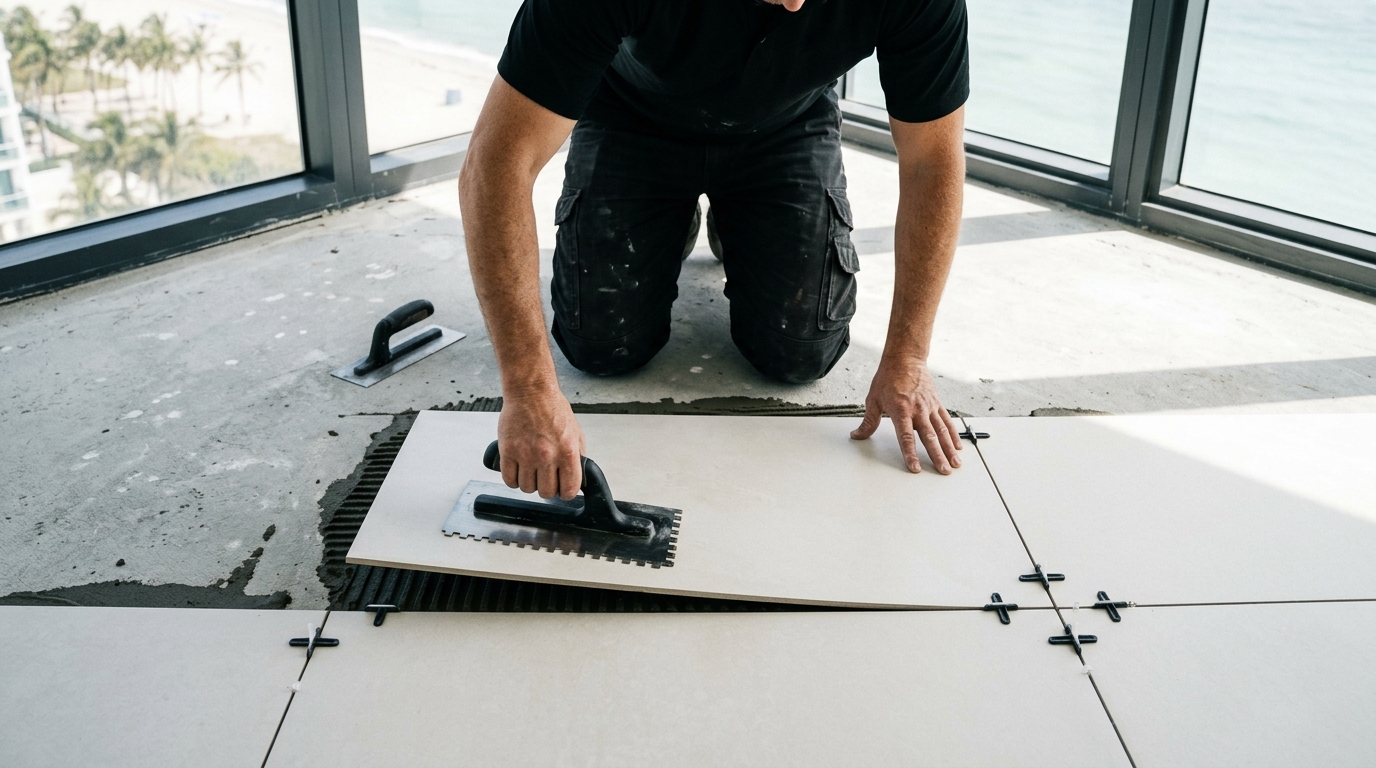
Mechanics that matter for installation:
Trade-offs: tile is hard and loud. Most buildings require an acoustic underlayment rated around IIC 50 or higher, so confirm your association's number before purchasing. Installation takes longer than LVP because thinset must cure before grouting, usually 24 hours.
Terrazzo is marble, quartz, or glass chips set in cement or epoxy resin, then ground and polished. Many mid-century Miami Beach buildings already have terrazzo under carpet or old vinyl, so restoration can be cheaper than new flooring.
Restoration process:
Restoration commonly costs $6–$14 per square foot, well below new installation. Cracks that follow slab joints are normal and can be filled. Widespread cracking signals a slab movement issue that needs assessment before any finish goes down.
Trade-offs: new poured terrazzo adds weight and thickness, and many condo buildings restrict it. Terrazzo tile is a lighter alternative. It is also hard and cold sounding, so acoustic rules still apply.
Luxury vinyl plank with a rigid stone-polymer core (SPC) handles humidity far better than laminate. It installs as a floating floor in one to two days for a typical 900 sq ft unit and often meets sound rules with an attached pad.
What to specify:
Trade-offs: LVP can dent under heavy furniture, cannot be refinished, and lowers perceived value in luxury listings. It suits rentals, quick turnovers, and owners who plan to sell within five years.
Minor follow-up work, such as loose threshold strips, cracked tiles, or sticking doors, is exactly where Same Day Repair service helps, and every repair we complete carries a One Year Warranty.
Porcelain tile is the best all-around choice for Florida homes because it absorbs under 0.5% water, tolerates heat, and lasts 25–50 years. Terrazzo is the longest-lasting option, and SPC luxury vinyl plank is the best budget choice.
Yes, when the slab is sound. Restoration typically costs $6–$14 per square foot, less than most new flooring, and a polished terrazzo floor can last another 20 to 50 years with proper sealing.
Yes, if the tile is flat, tightly bonded, and the grout lines are filled or skimmed so they do not telegraph through. Confirm that the added height clears doors, appliances, and transition strips.
A 900 sq ft unit usually takes four to six working days, including demolition, slab prep, thinset cure time, and grouting. Large-format tile and leveling work add time.
Most do. Many Miami Beach associations require an acoustic rating such as IIC 50, approved work hours, and board approval before demolition. Request the rules in writing before ordering materials.
Call us today or fill out the form and we'll call you back within 2 business hours. Plans start at $69.99/mo.
1-833-426-3942