
Homeowner Tips & Guides
Learn how to vet a Miami storm damage repair contractor, from Florida license checks and deposit limits to AOB and deductible red flags. Includes a post-hurricane checklist for roof, water, and electrical damage.
The most reliable storm damage contractor in Miami holds an active Florida license verified at MyFloridaLicense.com, carries liability and workers' compensation coverage, provides a written estimate, and never demands more than 10% down. Florida law caps the deposit on roofing work at 10% or $1,000, whichever is less, for certain post-disaster contracts. Anything beyond that, or any pressure to sign on the spot, is a red flag.
After a hurricane or severe thunderstorm, Miami-Dade homeowners and apartment managers face a surge in demand and a surge in unlicensed operators. This guide covers the warning signs, a post-hurricane repair checklist, and how to handle the three most common damage scenarios: roof leaks, water intrusion, and electrical or AC failures.
Out-of-area trucks and door-knockers appear within 48 hours of every major storm. Not all are fraudulent, but these behaviors correlate strongly with problems:
| Factor | Reliable Contractor | Red-Flag Contractor |
|---|---|---|
| License | Active, verifiable on MyFloridaLicense.com | "Pending," expired, or none provided |
| Insurance | Certificate of liability and workers' comp sent directly from the carrier | Verbal claims or photocopied documents |
| Deposit | 10% or less, per Florida rules | 50% to 100% upfront |
| Estimate | Written, itemized, with timeline | Verbal or one-line total |
| Permits | Pulled in the contractor's name | Skipped or left to the homeowner |
| Warranty | Written workmanship warranty, such as a One Year Warranty | None, or "handshake" promises |
Sequence matters. Doing steps out of order can weaken an insurance claim or create safety hazards.
Wind-driven rain in South Florida exploits lifted shingles, cracked tiles, and compromised flashing around vents and chimneys. A small breach can saturate attic insulation and drywall within 24 to 48 hours.
A reliable contractor starts with a temporary tarp, usually secured to the roof deck rather than nailed through tile, then inspects the underlayment. The key trade-off is repair versus replacement. Under the Florida Building Code's 25% rule, if more than 25% of a roof section is damaged in a 12-month period, code may require replacing that entire section for roofs built before the 2007 code. Newer roofs are generally exempt, so confirm your roof's age before accepting a full replacement quote.
Ask these questions: Is the underlayment being replaced or just patched? Will flashing be resealed or replaced? What is the wind-uplift rating of the materials? A contractor who cannot answer in specifics is guessing.
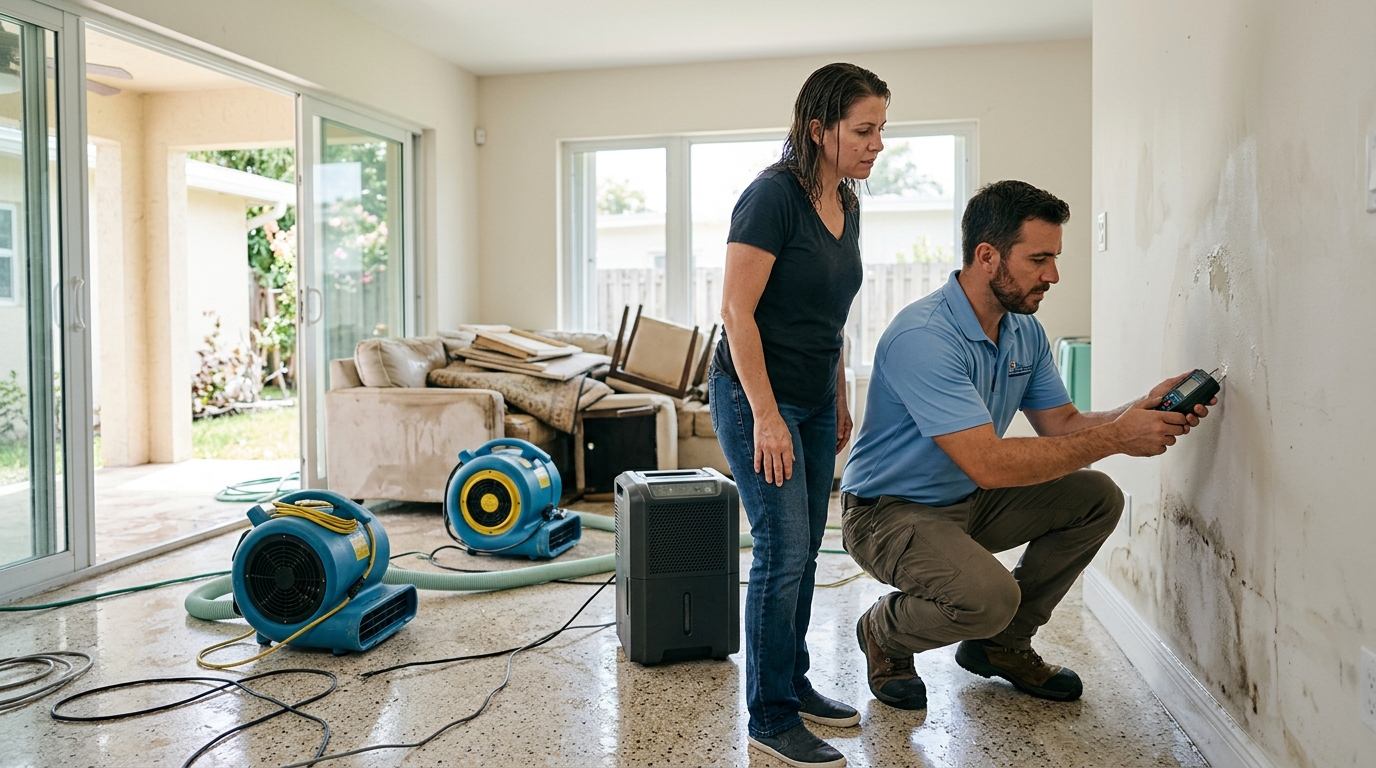
Miami's humidity accelerates mold. Growth can begin within 24 to 48 hours on wet drywall and wood. Restoration is a sequence, not a single task:
The red flag here is a contractor who rebuilds without moisture readings or who sprays antimicrobial over wet material and calls it finished. Request the drying log in writing. Floodwater from storm surge is Category 3 "black water" and requires full removal of affected porous materials, not drying.
Power surges, saltwater intrusion, and flooded condensing units cause damage that is easy to miss. Have a licensed Miami electrician inspect the panel, outlets, and GFCI circuits before restoring power to any flooded area. Corroded breakers can fail months later.
For air conditioning, outdoor condensers hit by debris or submerged in water often need compressor and capacitor testing, not only a visual check. Clean coils, check refrigerant pressure, and inspect the drain line, which storm debris frequently clogs. A trustworthy technician provides readings, not just a verdict. Same Day Repair availability matters here, since indoor humidity above 60% accelerates mold while the AC is down.
A handyman handles drywall patching, paint, trim, door and fixture replacement, caulking, and minor carpentry. Structural roofing, panel work, and refrigerant handling require licensed trades. The most efficient approach for many Miami homes is one coordinator who handles the small repairs the same day and refers licensed work properly, instead of three separate companies with three separate invoices.
Search the license number or business name at MyFloridaLicense.com, run by the Florida Department of Business and Professional Regulation. Confirm the status is "Current, Active" and check for disciplinary history.
For roofing contracts tied to a declared emergency, Florida limits the deposit to 10% of the contract price or $1,000, whichever is less, before work begins, with exceptions for special-order materials. Larger demands are a warning sign.
No. Florida law makes it illegal for a contractor to pay, waive, or rebate a deductible. Any contractor who offers this puts your claim at risk.
Begin extraction within 24 hours. Mold can start growing within 24 to 48 hours, and structural drying typically takes 3 to 5 days with verified moisture readings.
Roof replacement, electrical panel work, and structural repairs require permits. Minor cosmetic work generally does not. A licensed contractor pulls permits in their own name and schedules inspections.
Call us today or fill out the form and we'll call you back within 2 business hours. Plans start at $69.99/mo.
1-833-426-3942