
Homeowner Tips & Guides
A Miami condo board should hire one general contractor for multi-trade, permitted, or structural repairs, and individual trades for small single-scope jobs. This guide covers accountability, permitting, cost, and scheduling tradeoffs.
A Miami condo board should hire one general contractor for repairs that involve multiple trades, permits, or structural and envelope work, and hire individual trades only for small, single-scope jobs. American Handy fits the second category and the gaps around the first: it handles handyman-level repairs and maintenance, not licensed structural restoration or major building-wide projects.
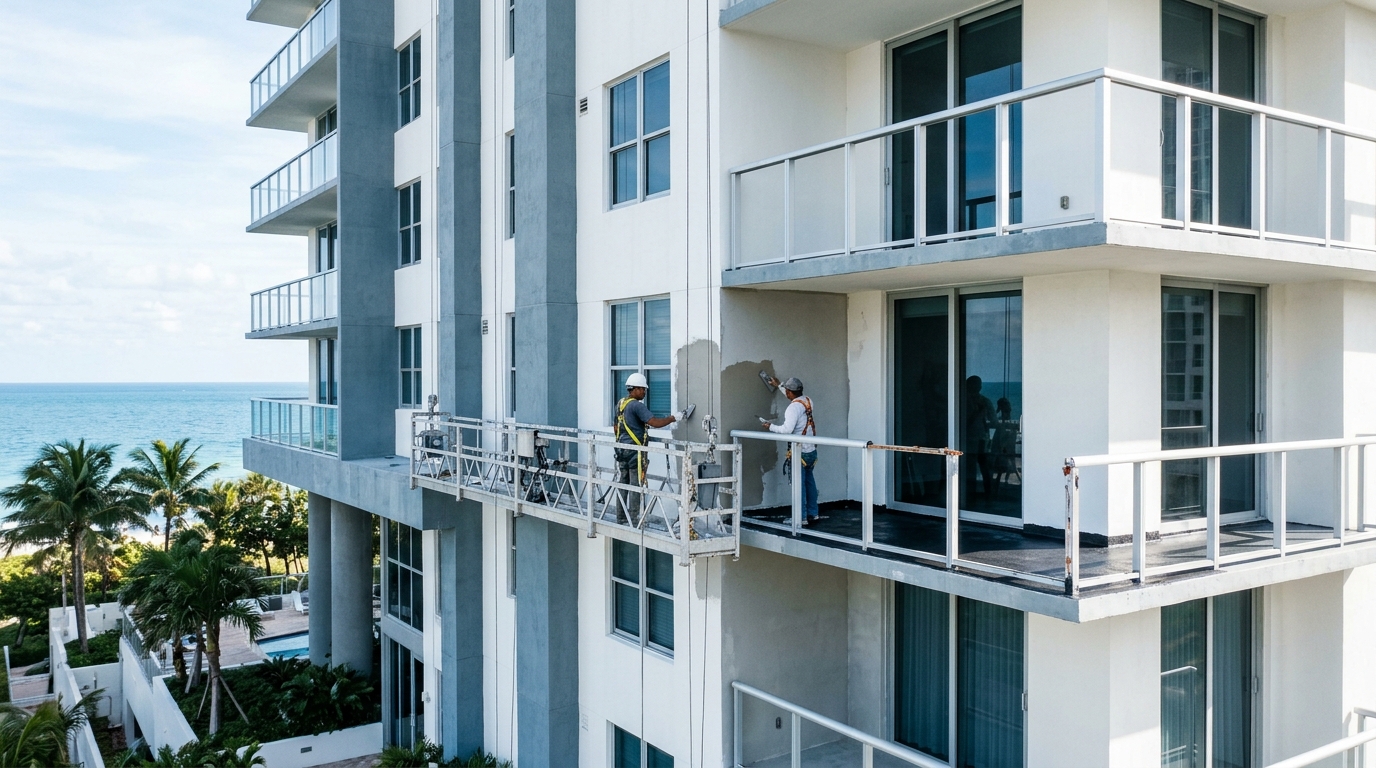
Count the trades. If a repair touches three or more (for example, stucco, waterproofing, painting, and railing work on one elevation), a single general contractor is the safer choice. One party owns the schedule, the permit, the warranty, and the insurance. If the job is one trade in one place, such as replacing a lobby light fixture or patching a drywall section, hiring that trade directly is faster and cheaper.
| Factor | One General Contractor | Several Trades |
|---|---|---|
| Accountability | One contract, one responsible party | Board coordinates and resolves disputes |
| Permitting | GC pulls and manages permits | Each trade or the board handles its own |
| Cost | Includes GC markup, often 10–20% | No markup, but board carries management time |
| Scheduling | GC sequences the work | Board sequences; delays cascade |
| Best for | Multi-trade, permitted, or structural projects | Small, single-scope repairs |
Miami-Dade and Broward buildings face salt air, hurricane exposure, and strict post-Surfside requirements. Florida law now mandates milestone inspections for older condo buildings and structural integrity reserve studies (SIRS). Repairs that come out of those reports are often structural, concrete, or waterproofing work that requires licensed professionals, engineered plans, and permits. A general contractor coordinates the engineer, the inspector, and the trades, and your board has one party to hold to the scope.
Boards also carry fiduciary duty. If three separate vendors finger-point over a leak that crosses their scopes, the board absorbs the delay and the legal exposure. A single contract avoids that.
Hiring separately works when the job is contained and the board has a capable manager. Good examples:
These jobs rarely need permits, and paying a general contractor markup on them wastes association money.
American Handy covers the small-repair side of that split. It is a handyman business, so it suits the routine maintenance and punch-list work that fills the gaps between big projects. It is not a substitute for a licensed general contractor on structural, concrete restoration, or permitted building-wide work. Boards often use both: a general contractor for the major project, and a handyman service for everything small that would otherwise clog the contractor's schedule or inflate its change orders.
Whichever route you choose, put the scope in writing, require a payment schedule tied to completed work, and hold back retainage until final inspection. Get lien waivers with every payment. Get bids from at least three vendors for any project large enough to need a board vote under your governing documents.
On paper, yes, because of the markup. In practice, a general contractor often saves money on multi-trade projects by preventing rework, scheduling gaps, and disputes. For single-trade repairs, hiring directly costs less.
No. American Handy handles handyman-level repairs and maintenance. Structural, permitted, or building-wide restoration work needs a licensed general contractor.
Yes, but only if someone qualified manages sequencing, permits, and inspections. Without that, the savings usually disappear into delays and change orders. Boards without a dedicated manager are better off with a general contractor on larger projects.
Call us today or fill out the form and we'll call you back within 2 business hours. Plans start at $69.99/mo.
1-833-426-3942