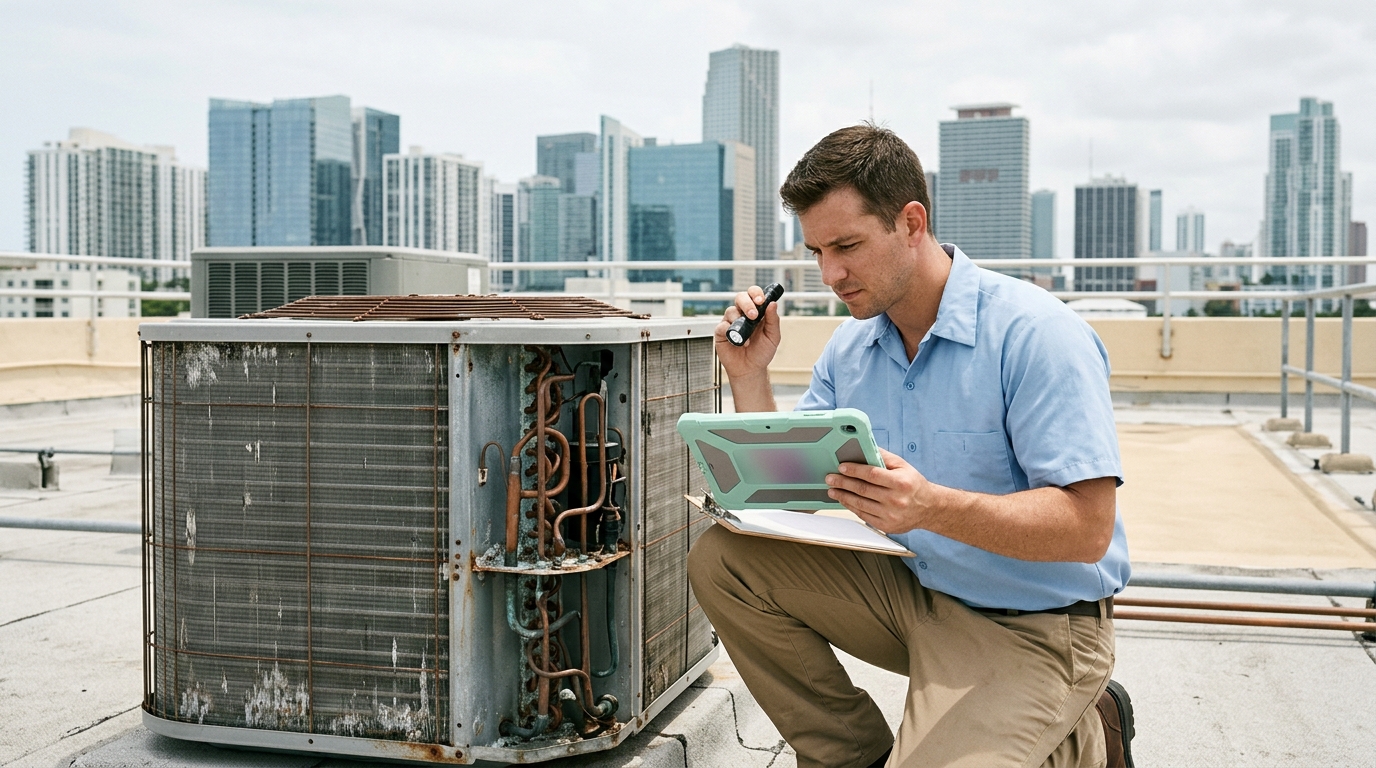
Miami apartment managers who follow a structured maintenance checklist reduce emergency repair costs by up to 40% and extend building system lifespans by 5–10 years. This 2026 guide covers every critical inspection category, from HVAC to electrical, with scheduling intervals matched to Miami's subtropical climate.
Why Miami Properties Need a Different Maintenance Approach
Miami's combination of year-round heat, 80%+ average humidity, salt air near the coast, and Atlantic hurricane season (June 1 through November 30) accelerates wear on every building system faster than in most U.S. cities. Mold, corrosion, and AC strain are not seasonal concerns here. They are year-round threats that reward proactive scheduling over reactive repair calls.
Apartment managers and commercial property owners who schedule inspections in advance consistently avoid the two most expensive outcomes: tenant complaints that trigger code enforcement visits, and emergency overnight repair calls that cost 2–3 times the standard rate.
Monthly Maintenance Tasks
These items require attention every 30 days without exception. Skipping a single cycle in Miami's climate can allow small issues to compound rapidly.
- AC filter replacement or cleaning: Miami systems run nearly continuously. Standard 1-inch filters clog within 3–4 weeks in occupied apartments. Replace monthly; use MERV-8 or higher to reduce mold spore circulation.
- Condensate drain line flush: Algae buildup in drain lines is the leading cause of AC water damage in South Florida apartments. Flush with a diluted bleach solution monthly.
- GFCI outlet testing: Test all ground-fault circuit interrupter outlets in kitchens, bathrooms, laundry rooms, and exterior areas. A non-tripping GFCI in a humid environment is a liability.
- Common area lighting inspection: Check stairwells, parking garages, hallways, and exterior fixtures. Replace bulbs immediately; burnt-out lighting in common areas is a safety and liability issue.
- Pest entry point check: Seal gaps around plumbing penetrations, door sweeps, and window frames. Miami's climate supports year-round pest pressure.
- Fire extinguisher visual check: Confirm pressure gauges read in the green zone and that extinguishers are unobstructed and properly mounted.
Quarterly Maintenance Tasks
Every 90 days, a more thorough inspection of mechanical and structural systems protects the property between annual service visits.
- Full AC system inspection: Check refrigerant levels, coil condition, blower motor, and thermostat calibration. A Miami office handyman or licensed HVAC technician should perform this service to keep warranties valid and catch efficiency losses early.
- Plumbing leak scan: Inspect under-sink cabinets, water heater connections, irrigation valve boxes, and rooftop mechanical rooms for active drips or staining. Address any slow drains before they become blockages.
- Electrical panel visual inspection: Look for tripped breakers, signs of heat discoloration, or corrosion on terminals. Panels in coastal properties corrode faster than inland installations. A licensed Miami electrician should perform any hands-on panel work.
- Roof and drainage check: Clear all roof drains, scuppers, and gutters of debris. Inspect membrane seams and flashing around penetrations. A blocked drain during a Miami afternoon storm can cause significant interior water damage within minutes.
- Elevator and stairwell inspection: Verify handrail integrity, step nosing condition, and elevator door sensor function.
- Exterior paint and caulk scan: Salt air and UV exposure degrade caulk around windows and doors within 12–18 months. Reapply where cracking or separation is visible.
Annual Maintenance Tasks
Once per year, schedule a comprehensive inspection that covers systems not addressed in monthly or quarterly cycles.
- Whole-building electrical inspection: A licensed electrician should test load balance across panels, inspect wiring in attic and crawl space areas, and verify that all outlets, switches, and fixtures meet current NEC code. Same day repair service for any identified hazards prevents extended liability exposure.
- Water heater flush and anode rod inspection: Sediment buildup reduces efficiency by up to 25% in hard water areas. Flush the tank and inspect the anode rod annually. Replace rods every 2–3 years depending on water quality.
- HVAC duct cleaning: Miami's humidity allows mold and dust accumulation in ductwork. Annual cleaning improves air quality and reduces system strain. Document service with photos for tenant records.
- Smoke and CO detector replacement or testing: Replace batteries, test alarm function, and replace any detector older than 10 years. Florida law requires working detectors in all residential units.
- Backflow preventer certification: Required annually by Miami-Dade Water and Sewer Department for most commercial and multi-family properties. Schedule with a licensed plumber and file the certification before the deadline.
- Hurricane preparedness audit: Inspect impact windows and doors for seal integrity, verify storm shutter hardware function, and confirm that the property's emergency contact list and generator fuel supply are current.
Pre-Hurricane Season Checklist (Complete by May 31)
Miami managers should treat pre-hurricane preparation as a mandatory annual maintenance category, not an optional add-on. Complete these items before June 1 each year.
- Test and service any standby generators. Run under load for at least 30 minutes and change the oil if the unit has operated more than 100 hours since the last change.
- Inspect and tighten roof-mounted HVAC equipment anchor bolts.
- Confirm that all outdoor furniture, signage, and loose equipment in common areas can be secured or stored before a storm.
- Verify that the property's flood insurance policy is current and that coverage limits reflect current replacement costs.
- Stock emergency supplies: flashlights, first aid kits, and contact numbers for a same day handyman service and emergency electrician.
Maintenance Service Comparison: In-House vs. Professional Handyman
| Task Category |
In-House Staff |
Professional Handyman Service |
Licensed Specialist Required |
| AC filter replacement |
Yes |
Yes |
No |
| Condensate drain flush |
Yes |
Yes |
No |
| Full AC system inspection |
No |
Yes (HVAC-trained) |
For refrigerant work: Yes |
| GFCI outlet testing |
Yes (trained staff) |
Yes |
No |
| Electrical panel inspection |
No |
No |
Yes (licensed electrician) |
| Plumbing leak scan |
Yes (visual only) |
Yes |
For repairs: Yes |
| Roof drain clearing |
Yes |
Yes |
No |
| Backflow preventer certification |
No |
No |
Yes (licensed plumber) |
Working with a Miami Handyman Service: What to Require
When hiring a handyman near me or a commercial property maintenance team in Miami, require the following before authorizing any work:
- Proof of general liability insurance with a minimum of $1 million per occurrence.
- One Year Warranty on all labor and installed parts. Any reputable service provider in Miami offers this as a standard commitment, not an upgrade.
- Same Day Repair availability for urgent issues. Confirm this in writing before an emergency occurs, not during one.
- Licensed subcontractor network for electrical and plumbing work that exceeds handyman scope. A quality handyman service will refer electrical panel or gas line work to licensed professionals rather than attempt it outside their license scope.
- Documented service reports after every visit. These protect apartment managers during code inspections and tenant disputes.
Apartment Maintenance Checklist FAQ
How often should Miami apartment managers schedule AC service?
AC filters require monthly replacement or cleaning in Miami. A full system inspection by a qualified technician should occur quarterly, with a comprehensive service including coil cleaning and refrigerant check at least once per year. Buildings with older HVAC units (10+ years) benefit from twice-yearly full inspections.
What is the most common cause of water damage in Miami apartment buildings?
Clogged condensate drain lines are the leading cause of interior water damage in Miami apartments, followed by blocked roof drains during heavy rain events. Monthly drain flushing and quarterly roof inspections directly address both risks.
Do Miami apartment managers need a licensed electrician for routine electrical checks?
Visual checks of GFCI outlets and lighting fixtures are within the scope of a trained handyman or maintenance staff. Any work inside electrical panels, new circuit installation, or wiring repairs requires a licensed Miami electrician under Florida State and Miami-Dade County code.
What does a One Year Warranty on handyman repairs cover?
A One Year Warranty on labor means the service provider will return at no charge to correct any defect in their workmanship within 12 months of the original repair. It does not typically cover unrelated failures or damage caused by tenant misuse. Always confirm the warranty scope in writing before work begins.
How should apartment managers prepare their Miami property for hurricane season?
Complete a pre-hurricane audit by May 31 each year. Key steps include generator testing, roof equipment anchor inspection, storm shutter hardware verification, and confirming that flood insurance coverage reflects current replacement costs. Establish a Same Day Repair contact with a local handyman service before the season begins so emergency response is pre-arranged.