
Homeowner Tips & Guides
Miami's subtropical climate drives predictable building failures from HVAC breakdowns to roof membrane damage. A structured apartment maintenance checklist can cut reactive repair costs by more than half.
Miami's five most common commercial building repairs are HVAC system failures, plumbing leaks, electrical panel issues, roof membrane damage, and exterior waterproofing failures. Each one is predictable, each one is preventable with a structured apartment maintenance checklist and scheduled inspections, and each one costs two to five times more to fix reactively than proactively. Property managers who operate on a fixed maintenance calendar consistently avoid the emergency service calls that erode net operating income.
This guide breaks down the mechanics behind each failure type, the inspection triggers that signal trouble early, and the prevention protocols that work specifically in Miami's subtropical climate.
Commercial HVAC units in Miami run an average of 10–12 months per year. That runtime compresses the wear cycle compared to northern markets where systems sit idle for months. The most common failure points are evaporator coil corrosion, clogged condensate drain lines, and refrigerant leaks caused by vibration fatigue in copper tubing.
Evaporator coil corrosion accelerates in coastal Miami because salt-laden air attacks aluminum fins. A coil that might last 15 years in a dry inland climate can show significant pitting within 5–7 years in Brickell or Miami Beach. The fix is not cleaning; it is applying an epoxy coil coating during the next scheduled service. This adds roughly $200–$400 per unit and extends coil life by three to five years.
Condensate drain lines clog with algae and biofilm in Miami's humidity. A clogged drain causes the unit to shut down on a float switch, which tenants experience as a complete system failure. Prevention is straightforward: flush drain lines with a diluted bleach solution quarterly and install a secondary drain pan sensor that alerts building management before flooding occurs.
Prevention schedule for commercial HVAC in Miami:
A licensed air conditioning service technician should perform the annual refrigerant and electrical inspection. Verifying refrigerant charge without proper equipment produces inaccurate readings and can void manufacturer warranties.
Plumbing leaks rank second in frequency for Miami commercial properties, and the damage multiplies quickly because high ambient humidity slows evaporation inside wall cavities. A pinhole leak inside a drywall partition can sustain mold growth for weeks before visible staining appears on the surface.
The primary culprits in older Miami commercial buildings are corroded copper supply lines, deteriorated wax rings and wax-free seals at floor fixtures, and failing pressure regulators that allow line pressure to exceed 80 PSI. High water pressure is the single most damaging chronic condition in commercial plumbing. Every fixture, valve, and connection is rated for a maximum pressure, and sustained overages cause joint failures, running toilets, and accelerated water heater wear.
Install a main line pressure gauge at the building's water entry point. Check it monthly. If pressure consistently reads above 75 PSI, install or replace the pressure-reducing valve (PRV). A PRV replacement typically costs $350–$600 for parts and labor, and it protects thousands of dollars of downstream fixtures.
For apartment managers and commercial property managers, add these items to your inspection rotation:
Electrical failures in Miami commercial buildings cluster around three scenarios: overloaded panels in older properties that have not been updated for modern tenant load requirements, loose connections at breakers and bus bars that generate heat, and aluminum wiring spliced improperly to copper fixtures in properties built during the 1965–1975 period.
A loose breaker connection does not trip a circuit. It creates resistance, generates heat, and eventually causes an arc fault or fire. The inspection method is a thermal imaging scan of the panel, which shows hot spots as temperature differentials of 10°F or more above ambient. Schedule a thermal scan annually as part of your commercial property maintenance Miami protocol. A qualified Miami electrician can complete a panel scan in under an hour and produce a written report with priority repair rankings.
For buildings with aluminum branch circuit wiring, the correct repair is not replacement of the entire wiring system. It is installation of CO/ALR-rated devices at every outlet and switch, plus application of antioxidant compound at all aluminum-to-copper splices. This is a code-compliant and cost-effective solution compared to full rewiring.
Signs that require immediate electrical service:
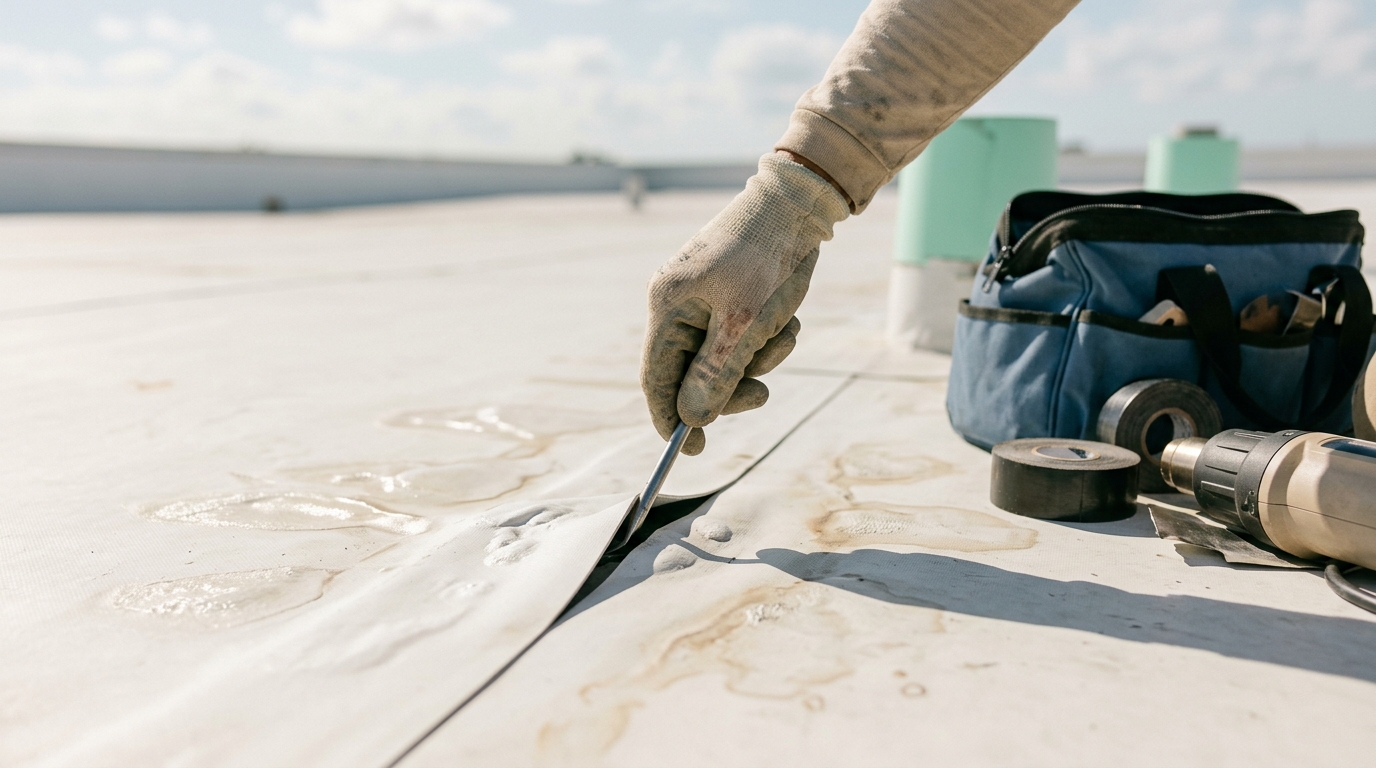
South Florida's commercial roofing stock is predominantly flat or low-slope, covered with modified bitumen, TPO, or EPDM membranes. These systems fail at seams, penetrations (HVAC curbs, exhaust vents, conduit entries), and perimeter flashings. Miami's rain intensity, which regularly produces 2–4 inches per hour during afternoon storms, turns a 1-inch seam separation into a significant interior flood within a single weather event.
The annual roof inspection must happen before hurricane season, which runs June 1 through November 30. A post-season inspection in December identifies membrane fatigue caused by wind uplift and flying debris. Walk the roof after any storm producing winds above 50 mph and photograph all penetrations and perimeter flashings. Membrane repairs at seams cost $15–$40 per linear foot; full membrane replacement costs $8–$15 per square foot depending on system type. Early repair is the clear economic choice.
Apply a roof coating reflective system every 5–7 years on TPO and modified bitumen surfaces. This restores waterproofing at the surface level, lowers roof deck temperature by up to 30°F, and directly reduces HVAC load for the top floor, which connects this repair category back to HVAC longevity.
Miami commercial buildings face exterior waterproofing failures at a higher rate than virtually any other U.S. market. The combination of UV radiation, salt air, hurricane-force wind-driven rain, and thermal cycling causes stucco cracks, failed caulk joints at window perimeters, and delaminating elastomeric coatings.
The critical inspection point is the interface between windows and walls. Miami-Dade County's wind-driven rain test standards (TAS 202 and related protocols) are the most demanding in the country, and even code-compliant window installations depend on properly maintained sealant joints to perform as designed. Polyurethane caulk at window perimeters has a serviceable life of 7–10 years under direct UV exposure. Budget for full window perimeter recaulking on a 7-year cycle for exterior-facing commercial spaces.
Stucco cracks wider than 1/16 inch require crack injection or routing and sealing before painting. Painting over stucco cracks traps moisture behind the coating, which accelerates spalling and can compromise the substrate. A miami office handyman service can handle minor crack repairs and caulking; structural stucco failures that expose the lath layer require a licensed stucco contractor.
| Repair Category | Reactive Repair Cost (Avg.) | Preventive Maintenance Cost (Annual) | Prevention Saves |
|---|---|---|---|
| HVAC System Failure | $1,800–$4,500 | $400–$700 per unit | 60–75% |
| Plumbing Leak (with mold) | $3,000–$12,000 | $200–$400 per year | 70–85% |
| Electrical Panel Repair | $800–$3,500 | $150–$300 (thermal scan) | 65–80% |
| Roof Membrane Failure | $5,000–$25,000 | $500–$1,200 per inspection cycle | 70–90% |
| Exterior Waterproofing | $4,000–$18,000 | $300–$800 per caulking cycle | 75–85% |
A checklist that lives in a binder does not prevent repairs. A checklist tied to calendar reminders, vendor contracts, and a work order system does. Assign specific months to each inspection category. For Miami properties, structure the calendar around the hurricane season boundary: complete HVAC, roof, and exterior waterproofing inspections in April and May, before the June 1 season start. Complete plumbing and electrical inspections in October and November, when occupancy patterns are stable and vendors have more scheduling availability.
For same-day repair needs that fall outside the scheduled maintenance window, a local same day handyman service with a one year warranty on completed work provides the fastest path to resolution without the overhead of a general contractor engagement. Document every repair with photos, invoice, and warranty terms in a property maintenance log. This record directly supports insurance claims, capital expenditure planning, and due diligence packages if the property is ever sold or refinanced.
Commercial HVAC systems in Miami require a minimum of two professional inspections per year: one in April before peak cooling season and one in October after the highest-demand months. Monthly filter checks and condensate drain flushes should be performed by building staff between professional visits.
Maintaining caulk joints at all window perimeters and roof penetrations is the highest return-on-investment waterproofing action. Budget for full perimeter recaulking every 7 years and inspect all joints annually. This single measure prevents the majority of interior water damage claims in Miami commercial properties.
Any work inside the electrical panel, replacement of breakers, new circuit installation, or repair of aluminum branch circuit wiring requires a licensed electrician. Outlet and switch replacement, GFCI installation, and fixture swaps in previously existing circuits can be completed by a qualified handyman in Miami under Florida's current scope-of-work guidelines.
Qualified handyman near me services in Miami routinely work in commercial buildings, apartment complexes, and office spaces. The work scope includes minor plumbing repairs, drywall patching, door hardware, caulking, light fixture replacement, and other maintenance tasks that do not require licensed trade permits. Always confirm the service carries commercial general liability insurance before scheduling.
Reputable handyman and trade services in Miami offer a one year warranty on labor for completed repairs. Manufacturer warranties on materials (membranes, fixtures, HVAC components) run separately and range from 1 to 10 years depending on product tier. Always obtain both warranties in writing and store them with your property maintenance records.
Call us today or fill out the form and we'll call you back within 2 business hours. Plans start at $69.99/mo.
1-833-426-3942