
Homeowner Tips & Guides
Water damage in a Miami home can cause mold, rot, and electrical hazards within 24 hours. This guide covers the exact steps to take after water intrusion and how to prevent it in South Florida's subtropical climate.
Water damage in a Miami home requires immediate action within the first 24–48 hours to prevent structural rot, mold growth, and electrical hazards. Miami's subtropical climate, with annual rainfall exceeding 61 inches and a hurricane season running June through November, makes water intrusion one of the most common and costly property issues in South Florida. This guide gives homeowners, apartment managers, and service people a clear sequence of steps to take after water damage occurs and a concrete prevention plan to reduce future risk.
The moment you identify water intrusion, safety comes before cleanup. Standing water in contact with electrical outlets, panels, or appliances creates an electrocution risk. Before entering a flooded room, shut off the circuit breaker for that zone at your main panel. If the panel itself is wet or in the affected area, do not touch it. Call a licensed Miami electrician to assess the situation before power is restored.
Once power is confirmed safe, document everything with photos and video before moving a single piece of furniture or pulling up flooring. Insurance adjusters and restoration contractors need a clear record of the original damage. Skipping this step can result in disputed claims and reduced payouts.
Next, identify and stop the water source. Common sources in Miami homes include:
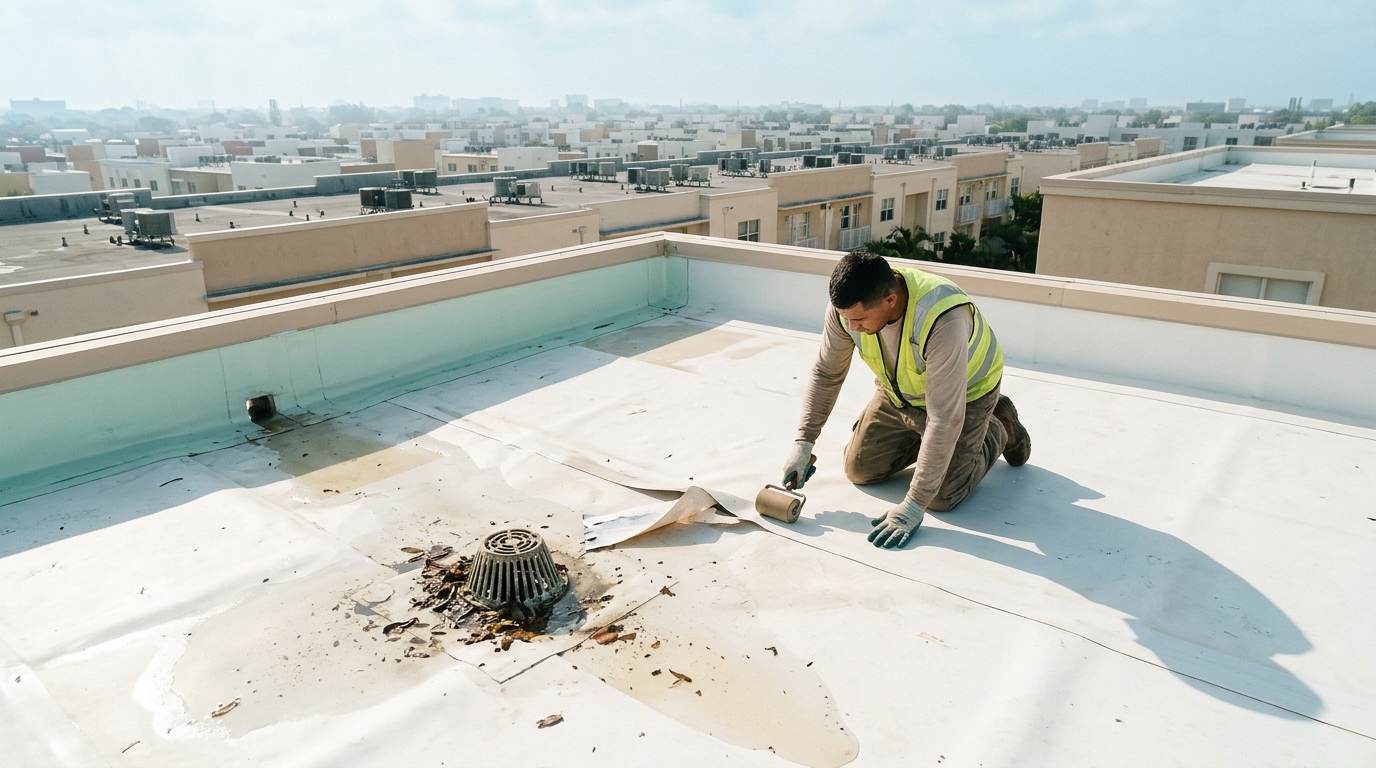
If the source is a plumbing failure, shut off the main water supply valve, typically located near the street meter or inside the utility closet. For AC condensate overflow, turn off the air handler and clear the drain pan. For roof-related intrusion, place buckets and use heavy plastic sheeting to isolate the affected ceiling area until timely repair is arranged.
Begin water extraction immediately. Wet vacuums handle moderate volumes effectively. For significant flooding (over one inch of standing water), industrial extractors used by water restoration companies remove water far faster and reduce the saturation window in floors and walls. Miami's high ambient humidity means saturated drywall and wood begin supporting mold colonies within 24–48 hours, not the 72-hour window commonly cited in other climates.
After extraction, air movement and dehumidification are the two variables that determine whether you get a clean restoration or a mold remediation project. Industrial dehumidifiers and air movers (not standard box fans) are the correct tools. Box fans simply circulate humid Miami air and extend drying time. Professionals measure moisture content in walls and subfloors using pin-type moisture meters; readings should reach below 16% in wood and below 0.5% in concrete before a space is considered dry.
Drywall that has absorbed water past the lower 12 inches typically requires removal. Attempting to dry in-place drywall in Miami's climate traps moisture behind the paper facing and creates a hidden mold environment within days. Baseboards, door casings, and lower wall sections should be cut away to allow air circulation inside the wall cavity. Insulation, particularly fiberglass batts, holds moisture effectively and almost always requires replacement rather than drying.
Hardwood and engineered wood flooring require a judgment call based on saturation time and subfloor condition. Floors saturated for fewer than 12 hours on a concrete slab with no subfloor damage can sometimes be dried in place with aggressive air movement. Floors over wood subfloors, or those saturated longer, generally require removal to dry the subfloor and inspect for rot.
Mold prevention after water damage requires an EPA-registered antimicrobial applied to all affected surfaces after drying. In Florida, mold remediation beyond 10 square feet requires a licensed mold remediation contractor. Attempting to paint over mold with antimicrobial paint without physical removal violates Florida Department of Health guidelines and does not stop the underlying colony.
Water damage rarely stops at cosmetic surfaces. Before any finishing work begins, a qualified handyman or licensed contractor should assess the structural framing. Water-saturated wood studs lose significant compressive strength, and in Miami's wind-load zone, compromised studs in exterior walls create a code compliance issue, not just an aesthetic one. Any framing showing more than surface discoloration or that tests soft with a screwdriver probe requires replacement.
Electrical repairs after water damage deserve particular attention in Miami properties. Salt-air corrosion already accelerates oxidation in South Florida wiring. Water intrusion into outlet boxes, junction boxes, or the main panel compounds this. Outlets and switches in any flooded space must be replaced, not dried and reused. GFCI outlets in kitchens, bathrooms, and exterior locations are mandatory under the National Electrical Code and should be upgraded to 20-amp GFCI units during any water damage repair as a code-compliant best practice. A licensed Miami electrician performing same day repair can assess and restore power safely without cutting corners that create fire or shock hazards later.
Prevention in Miami requires addressing the specific threats the local environment creates. The following comparison outlines the most common water intrusion points in Miami homes and the maintenance actions that reduce each risk.
| Intrusion Point | Primary Miami Risk Factor | Recommended Maintenance Action | Frequency |
|---|---|---|---|
| Roof membrane and flashings | UV degradation, hurricane wind uplift | Professional inspection and recoating of flat roof membranes | Annually, pre-hurricane season (May) |
| Window and door seals | Thermal expansion cycles, salt air deterioration | Recaulk with polyurethane sealant rated for exterior use | Every 2–3 years |
| AC condensate drain lines | Algae growth in warm, humid conditions | Flush with diluted bleach solution; install float shut-off switch | Every 6 months |
| Gutters and downspouts | Heavy rain volume, organic debris accumulation | Clear and flush gutters; extend downspouts 6 feet from foundation | Twice yearly |
| Foundation and slab perimeter | Flat terrain, poor municipal drainage during storms | Maintain positive grade away from structure; seal visible cracks | Inspect annually |
| Plumbing supply lines | Hard water mineral buildup, aging copper | Inspect under-sink braided supply lines; replace every 5–7 years | Inspect annually |
Hurricane preparedness adds a specific layer to Miami property maintenance. Before June 1 each year, confirm that all impact windows and doors are properly seated and sealed, that the roof has no lifted or missing tiles, and that any roof-mounted equipment such as AC units and satellite dishes are securely fastened. A pre-season walkthrough by an experienced handyman can identify these vulnerabilities before a storm creates an emergency repair situation.
Minor water intrusion from a single leaking pipe, affecting a small area of vinyl or tile flooring and non-load-bearing drywall, is a realistic DIY project for a capable homeowner. Purchase or rent a moisture meter, extract the water, run dehumidifiers for 3–5 days, verify dryness, and replace the affected section of drywall and flooring.
Call a licensed professional for any of the following situations:
For apartment managers and property management professionals, same day handyman response matters because Florida Statute 83.51 requires landlords to maintain premises in a condition fit for habitation. Water damage that is not addressed promptly creates tenant habitability claims and potential legal exposure. Documenting professional same day repair with a written work order and photos protects the property owner.
Experienced handyman services in Miami that back their work with a one year warranty give both homeowners and property managers the accountability they need. A one year warranty on water damage repairs, including drywall, flooring reinstallation, and caulking, means any callback failures are covered without additional cost, which matters in a climate where conditions that caused the original damage can recur within the same season.
In Miami's subtropical humidity, mold colonies can begin forming on wet drywall, wood framing, and insulation within 24–48 hours of water exposure. This is faster than the 72-hour window often cited nationally because Miami's ambient relative humidity, frequently above 75%, provides additional moisture that accelerates spore germination even after visible water is removed.
Standard homeowner's insurance policies in Florida cover sudden and accidental water damage, such as a burst pipe or roof damage that allows rain to enter. Flood damage from storm surge or rising groundwater requires a separate flood insurance policy, typically through the National Flood Insurance Program (NFIP). Maintenance-related failures, such as a long-neglected roof or deteriorated caulking, are frequently excluded. Document all regular maintenance to support claims.
A condensate float switch is a small safety device installed in the AC drain pan that automatically shuts off the air handler when the pan fills with water, preventing overflow onto ceilings, walls, and floors. Miami AC units run 10–12 months per year, generating significant condensate volume. Algae buildup in drain lines, a common issue in warm climates, causes blockages that lead to overflow damage. A float switch costs under $30 in parts and is a standard item a handyman can install in under an hour.
Look for a licensed and insured handyman service in Miami that offers a one year warranty on completed work, provides written estimates before starting, and can confirm same day repair availability for urgent situations. Verify that any electrical work is performed by or overseen by a licensed electrician, as Florida law requires electrical permits for panel and wiring work. Review completed project photos and ask specifically about experience with water damage restoration, mold prevention, and drywall replacement in South Florida's climate.
You can paint over water stains with a shellac-based or oil-based stain-blocking primer only after confirming the drywall is fully dry (below 0.5% moisture content as measured with a moisture meter) and shows no signs of mold, structural softening, or paper delamination. If the drywall is soft to the touch, crumbling, or shows any discoloration beyond a surface stain, replacement is required. Painting over compromised drywall in Miami's climate traps residual moisture and creates conditions for hidden mold growth within weeks.
Call us today or fill out the form and we'll call you back within 2 business hours. Plans start at $69.99/mo.
1-833-426-3942